
10 Scriptures About Forgiveness and Letting Go
Carrying the weight of an old wound? These 10 Bible verses on forgiveness — with original-language context and practical application — show what it means to truly let go.
10 Scriptures About Forgiveness and Letting Go
Introduction
If you are carrying the weight of an old wound — a betrayal by a friend, a broken relationship, a wrong done to you that still replays in your mind — you are not alone. Forgiveness is one of the most difficult commands in all of Scripture, and yet it is also one of the most repeated. The Bible does not treat forgiveness as a feeling that arrives naturally; it treats it as a decision grounded in what God has already done for us.
Letting go does not mean pretending the hurt never happened, or that the person who wronged you was right to do so. It means releasing your grip on the debt you feel they owe you, and trusting God to be the righteous judge. These ten scriptures about forgiveness and letting go will walk you through what the Bible actually teaches — with historical context, original-language insight, and practical application for where you are today.
The Foundation: Why God Commands Forgiveness
1. Matthew 6:14–15 [blocked] — The Condition Jesus Attached to Prayer
"For if you forgive others their trespasses, your heavenly Father will also forgive you, but if you do not forgive others their trespasses, neither will your Father forgive your trespasses." — Matthew 6:14–15 (ESV)
Read Matthew 6 in context
Open the full chapter with AI commentary, cross-references, and multiple translations — free, no account required.
This verse comes directly from the Sermon on the Mount, Jesus's foundational teaching on the ethics of the Kingdom of God. He had just taught the disciples the Lord's Prayer, and these two verses are His only commentary on a single petition within it — the request for forgiveness. The emphasis is deliberate.
The Greek word translated "trespasses" is paraptōma, meaning a falling aside, a deviation from the right path. Jesus is not speaking of minor social offenses but of genuine moral failures. The structure of His statement is conditional: the forgiveness we receive from the Father is linked to the forgiveness we extend to others. This is not a works-based salvation passage; rather, it reveals that a heart that has truly received God's grace will be a heart that extends grace to others. An unforgiving spirit is a sign that the grace of God has not yet penetrated deeply enough.
Application: Ask yourself honestly — is there someone whose "debt" you are still holding? Name them before God today and ask Him to give you the willingness to release it.
2. Ephesians 4:31–32 [blocked] — Put Off Bitterness, Put On Kindness
"Let all bitterness and wrath and anger and clamor and slander be put away from you, along with all malice. Be kind to one another, tenderhearted, forgiving one another, as God in Christ forgave you." — Ephesians 4:31–32 (ESV)
Paul wrote Ephesians from a Roman prison around AD 60–62. The letter was likely a circular epistle sent to multiple churches in the region of Asia Minor. In chapter 4, Paul is describing the practical outworking of the new identity believers have received in Christ. The contrast here is sharp: the old self is characterized by pikria (bitterness — literally, a sharp, cutting quality), while the new self is characterized by chrēstos (kindness — useful, good, gentle).
The command to forgive is grounded in the phrase "as God in Christ forgave you." This is the theological engine of Christian forgiveness. We do not forgive because the other person deserves it, or because we feel ready, but because we ourselves have been forgiven an unpayable debt. For a deeper look at how to study this kind of passage, see our guide on why verse-by-verse Bible study matters [blocked].
Application: Write out Ephesians 4:32 and place it somewhere you will see it daily for one week. Each time you read it, recall one specific way God has forgiven you.
3. Colossians 3:13 [blocked] — Bear With One Another
"Bearing with one another and, if one has a complaint against another, forgiving each other; as the Lord has forgiven you, so you also must forgive." — Colossians 3:13 (ESV)
Colossians was written around the same time as Ephesians, and the two letters share significant thematic overlap. The phrase "bearing with one another" uses the Greek anechomenoi, which means to hold up, to endure, to sustain — the image is of carrying a load together. Paul acknowledges that living in community with other people means there will be grievances. The question is not whether someone will wrong you, but how you will respond when they do.
The word translated "forgiving" is charizomai, which shares its root with charis — grace. To forgive in the biblical sense is literally to grace someone. It is an act of giving something unearned and undeserved. Paul's standard is not "forgive if the person apologizes" but "as the Lord has forgiven you" — unconditionally, at great personal cost.
If you find this kind of verse-by-verse commentary helpful, Bible Compass provides AI-powered commentary for every passage in the Bible. Try it free →
Letting Go: Releasing the Debt
4. Luke 23:34 [blocked] — Jesus Forgave From the Cross
"And Jesus said, 'Father, forgive them, for they know not what they do.'" — Luke 23:34 (ESV)
This is perhaps the most stunning forgiveness statement in all of Scripture. Jesus speaks these words while being crucified — while nails are being driven through His hands and feet, while soldiers are gambling for His clothing, while the crowd mocks Him. The historical context is the Roman crucifixion, a form of execution designed to maximize suffering and public humiliation.
The Greek verb aphes (forgive) is an aorist imperative — a decisive, immediate command. Jesus does not wait until the soldiers repent. He does not forgive them after the resurrection when the evidence is undeniable. He forgives in the moment of maximum pain. The phrase "they know not what they do" does not excuse the sin; it explains the depth of human blindness. This verse sets the ultimate standard for what letting go looks like: releasing the debt before the other person even recognizes they owe one.
Application: Is there someone who has wronged you and shows no sign of remorse? Pray Luke 23:34 on their behalf today — not as a feeling, but as an act of your will.
5. Mark 11:25 [blocked] — Forgive When You Pray
"And whenever you stand praying, forgive, if you have anything against anyone, so that your Father also who is in heaven may forgive you your trespasses." — Mark 11:25 (ESV)
Jesus connects forgiveness directly to the act of prayer. The setting is the day after the triumphal entry, when Jesus has cursed the fig tree and cleansed the Temple. He is teaching His disciples about faith and prayer, and He inserts this condition without warning: before you pray, check your heart for unforgiveness.
The phrase "anything against anyone" is deliberately broad — ti kata tinos, literally "something against someone." Jesus is not limiting this to major offenses. Any grievance, any lingering resentment, any unresolved complaint is to be addressed before approaching the Father. This suggests that unforgiveness creates a kind of static in our communication with God — not that He cannot hear us, but that our own hearts are not in the posture of receiving.
God's Forgiveness as the Model
6. Psalm 103:12 [blocked] — As Far as the East Is From the West
"As far as the east is from the west, so far does he remove our transgressions from us." — Psalm 103:12 (ESV)
Psalm 103 is attributed to David and is one of the great hymns of God's compassion and covenant faithfulness. The image here is deliberately chosen: east and west are directions that never converge. Unlike north and south, which meet at the poles, east and west are infinitely diverging. The Hebrew word for "remove" is rāḥaq, meaning to put at a distance, to cause to be far away.
David is not speaking abstractly. He has experienced the weight of his own sin — the affair with Bathsheba, the murder of Uriah — and yet he writes of a God who removes transgressions completely. This is the God we are called to imitate. When we forgive someone, we are not required to pretend the offense never happened, but we are called to stop holding it against them — to put it at a distance. For a broader look at how Scripture addresses emotional pain, see our article on Bible verses for anxiety and worry [blocked].
7. Isaiah 43:25 [blocked] — God Forgives for His Own Sake
"I, I am he who blots out your transgressions for my own sake, and I will not remember your sins." — Isaiah 43:25 (ESV)
This verse is remarkable because God gives His reason for forgiving: "for my own sake." The Hebrew lema'anî means "for the sake of myself." God does not forgive because we have earned it, or because we have apologized sufficiently, or because our sins were small. He forgives because it is consistent with His own character and covenant purposes.
The verb "blots out" (māḥāh) means to wipe away, to erase completely — the image is of washing a writing tablet clean. And the phrase "I will not remember your sins" is not a statement about God's omniscience (He knows all things) but about His deliberate choice not to bring them up again, not to hold them in account against us. This is the model for human forgiveness: a choice not to keep a record of wrongs (cf. 1 Corinthians 13:5).
8. 1 John 1:9 [blocked] — Confession and Cleansing
"If we confess our sins, he is faithful and just to forgive us our sins and to cleanse us from all unrighteousness." — 1 John 1:9 (ESV)
John wrote this letter late in the first century, likely from Ephesus, to address early Gnostic tendencies that denied the reality of sin. The verse is structured as a conditional promise: if we confess, then He forgives and cleanses. The Greek homologōmen (confess) means to say the same thing — to agree with God about what our sin is, to call it what He calls it.
The word "cleanse" (katharizō) is the same word used in the Septuagint for the ritual purification of the Temple. John is saying that confession does not merely receive a legal pardon — it produces an actual internal cleansing. This verse is foundational for understanding why we can let go of guilt: not because we have minimized our sin, but because God has genuinely removed it. For a practical guide to building a consistent Scripture habit, see our article on how to study the Bible effectively [blocked].
Releasing Bitterness: The Freedom of Letting Go
9. Romans 12:19 [blocked] — Vengeance Belongs to God
"Beloved, never avenge yourselves, but leave it to the wrath of God, for it is written, 'Vengeance is mine, I will repay, says the Lord.'" — Romans 12:19 (ESV)
Paul is quoting Deuteronomy 32:35, a passage from Moses's final song before his death. The command "never avenge yourselves" uses the present imperative in Greek — a continuous action: do not keep taking revenge, do not make a habit of it. The word "beloved" (agapētoi) is significant: Paul addresses his readers as those who are deeply loved by God, and it is from that position of being loved that they can afford to release vengeance.
The logic is profound: we can let go of the demand for immediate justice because we trust that God's justice is perfect and certain. We are not forgiving because the wrong doesn't matter; we are forgiving because we believe God will handle it rightly. This is what makes forgiveness possible for the most serious offenses — not minimizing the wrong, but entrusting it to a Judge who sees everything and will act with perfect righteousness.
10. Hebrews 12:15 [blocked] — Watch Out for the Root of Bitterness
"See to it that no one fails to obtain the grace of God; that no 'root of bitterness' springs up and causes trouble, and by it many become defiled." — Hebrews 12:15 (ESV)
The author of Hebrews quotes Deuteronomy 29:18, where Moses warns Israel against any person whose heart turns away from God toward idolatry — a "root bearing poisonous and bitter fruit." The metaphor is agricultural: a root is hidden underground, invisible, but it is already growing. By the time bitterness becomes visible in behavior, it has already spread deep into the soil of the heart.
The Greek pikria (bitterness) is the same word Paul uses in Ephesians 4:31. The warning here is not only personal but communal: bitterness "defiles many." An unforgiving spirit does not stay contained within one person — it poisons relationships, families, and churches. The antidote is not willpower but grace: "see to it that no one fails to obtain the grace of God." Forgiveness flows from receiving grace, not from generating it ourselves.
Putting It Into Practice
Understanding these scriptures about forgiveness and letting go is one thing; living them is another. Here are two practical steps you can take today.
First, distinguish forgiveness from reconciliation. Forgiveness is a decision you make before God, regardless of the other person's response. Reconciliation is a restored relationship, and it requires both parties. You can fully forgive someone and still maintain appropriate distance from a relationship that is unsafe or unrepentant. Forgiveness releases the debt; it does not necessarily restore the relationship to what it was.
Second, pray the verses, not just about them. Take Matthew 6:14 or Colossians 3:13 and turn them into a prayer: "Father, as You have forgiven me in Christ, I choose to forgive [name] for [specific offense]. I release this debt. I trust You to be the judge." Praying Scripture over specific situations is one of the most powerful ways to move forgiveness from the intellect into the will. If you want to build this kind of verse-by-verse prayer habit, a structured Bible reading plan for beginners [blocked] can help you develop the daily discipline.
Recommended Reading on Forgiveness
For those who want to go deeper, three books stand out as the most trusted Christian resources on forgiveness: Total Forgiveness by R.T. Kendall (a pastoral exploration of what total forgiveness actually requires), What’s So Amazing About Grace? by Philip Yancey (a Gold Medallion Award winner on how God’s undeserved forgiveness transforms how we treat others), and Forgive and Forget by Lewis B. Smedes (a classic that walks readers through the four stages of forgiveness with pastoral warmth). All three are available through the Bible Compass Resources page [blocked].
A Final Word
Forgiveness is not a feeling that arrives on its own. It is a decision, made again and again, grounded in the reality of what God has done for us in Christ. The ten scriptures above are not a checklist to complete but a well to return to — especially on the days when the wound feels fresh again and the choice to let go feels impossible.
The God who "blots out your transgressions for His own sake" (Isaiah 43:25) is the same God who gives you the grace to extend that same mercy to others. You do not have to generate forgiveness from within yourself. You receive it from Him, and then you pass it on.
If you found these verse-by-verse commentaries helpful, Bible Compass provides this kind of insight for every passage in the 66-book Bible — including original-language word studies for every verse on forgiveness. You can explore cross-references, start a personalized reading plan, and build a daily study habit — all for free. Open the Bible Reader → [blocked]
Recommended Reading
Deepen your study with these hand-picked books related to this article.
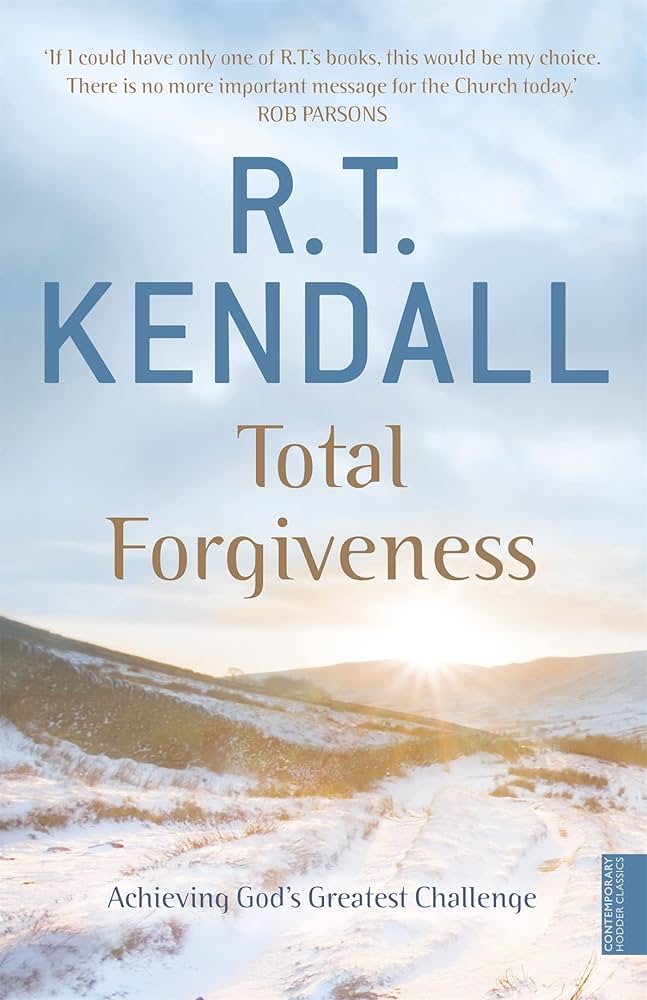
Total Forgiveness
R.T. Kendall
A deeply pastoral exploration of what total forgiveness actually requires, why it is so difficult, and how it transforms the one who forgives. Kendall draws on his own experience of forgiving those who wronged him in ministry. One of the most widely recommended books on the subject.
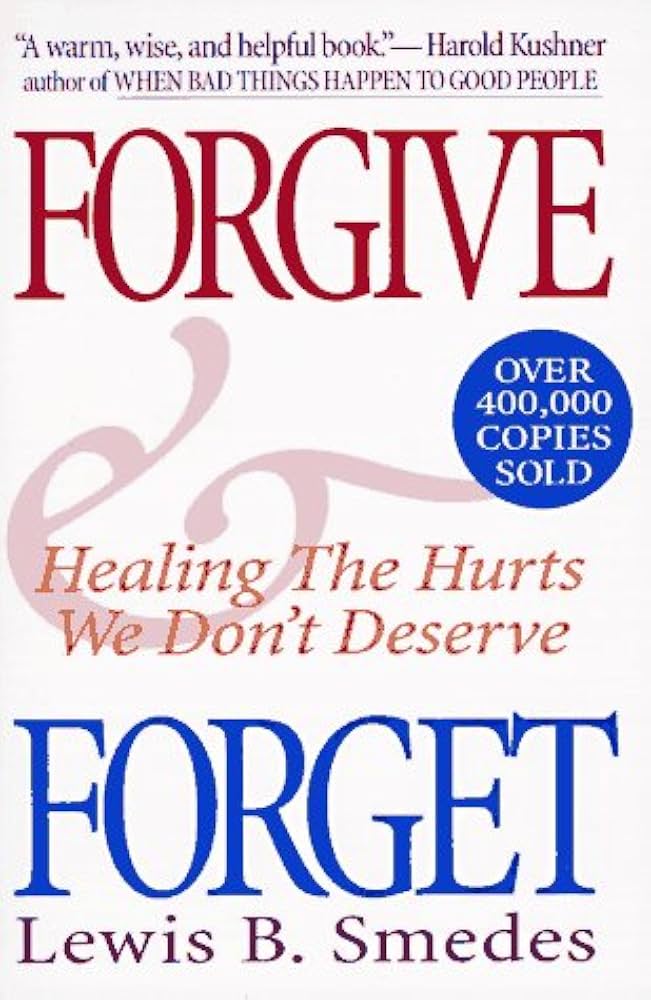
Forgive and Forget
Lewis B. Smedes
A classic with over 400,000 copies sold. Smedes walks readers through the four stages of forgiveness — hurt, hate, healing, and coming together — with pastoral warmth and psychological insight. One of the most practical books ever written on letting go.

What's So Amazing About Grace?
Philip Yancey
Gold Medallion Award winner and Christian Book of the Year. Yancey explores grace at street level, showing how the undeserved forgiveness of God transforms how we treat others. Essential reading for anyone who struggles to understand why forgiveness is possible.
As an Amazon Associate, Bible Compass earns from qualifying purchases.
Get the 7-Day Holy Week Devotional
Palm Sunday → Resurrection Sunday — free, delivered to your inbox
Related Articles

15 Bible Verses for Anxiety and Worry
Anxiety touches every part of life. These 15 Bible verses address worry from every angle — from surrendering control to finding peace, from trusting God's provision to resting in His presence.

The New Heaven and New Earth — Revelation 21–22
The Bible does not end with judgment. It ends with a city. Revelation 21–22 describes the final destination of all of human history: a new heaven and a new earth, the Holy City New Jerusalem descending from God, the river of life, the Tree of Life, and the face of God seen at last. This verse-by-verse study of the last two chapters of Scripture explores what the eternal state actually looks like — and why it is far more physical, concrete, and glorious than most Christians imagine.

The Millennium and the Great White Throne — Revelation 20
Between the Second Coming and the eternal state stands a thousand years. Revelation 20 describes the binding of Satan, the first resurrection, the Millennial reign of Christ, the final rebellion, and the Great White Throne Judgment — the most comprehensive account of the end of history in all of Scripture. This verse-by-verse study examines what the Millennium is, who reigns during it, and what the Great White Throne means for every human being who has ever lived.
Reader Discussion
(0)Sign in to join the discussion.
No comments yet. Be the first to share your thoughts!
Continue Your Study
Explore the Bible with Scripture-grounded commentary, cross-references, and study tools.