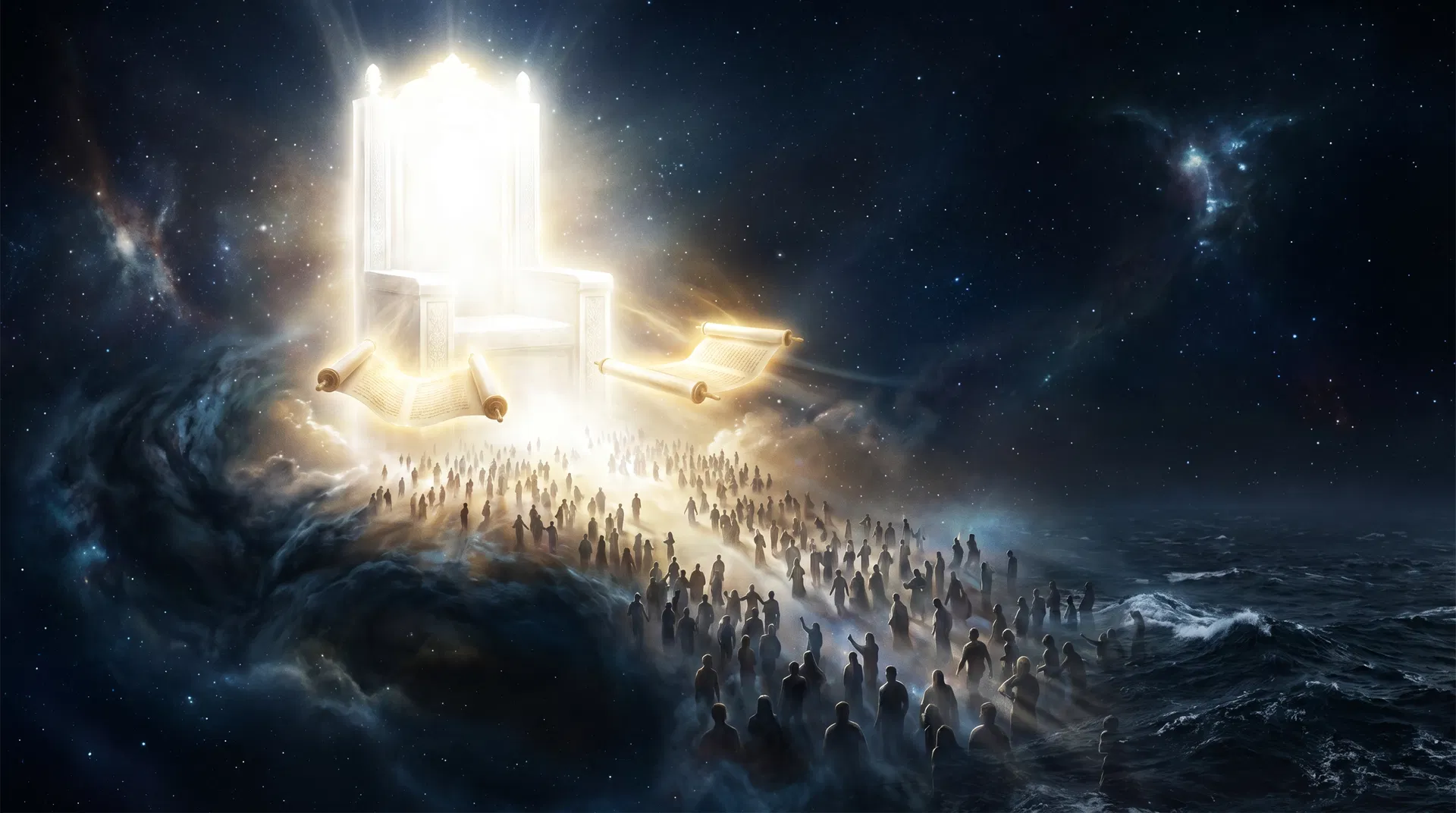
The Millennium and the Great White Throne — Revelation 20
Between the Second Coming and the eternal state stands a thousand years. Revelation 20 describes the binding of Satan, the first resurrection, the Millennial reign of Christ, the final rebellion, and the Great White Throne Judgment — the most comprehensive account of the end of history in all of Scripture. This verse-by-verse study examines what the Millennium is, who reigns during it, and what the Great White Throne means for every human being who has ever lived.
You are reading End Times Series — Part 11 of 12. Parts 12–13 are already published.
The Second Coming of Christ in Revelation 19 is not the end of the story. Between the defeat of the Antichrist and the creation of the new heaven and new earth stands a chapter that has generated more theological debate than almost any other in Scripture: Revelation 20. In twenty-two verses, John describes the binding of Satan, a thousand-year reign of Christ on earth, a final rebellion, and the most solemn judgment scene in all of the Bible. Understanding this chapter requires careful attention to the text, awareness of the major interpretive positions, and a willingness to follow the plain meaning of the words where they lead.
The Binding of Satan (Revelation 20:1-3)
"Then I saw an angel coming down from heaven, holding in his hand the key to the bottomless pit and a great chain. And he seized the dragon, that ancient serpent, who is the devil and Satan, and bound him for a thousand years, and threw him into the pit, and shut it and sealed it over him, so that he might not deceive the nations any longer, until the thousand years were ended." — Revelation 20:1-3 (ESV)
Read Revelation 20 in context
Read the full passage with verse-by-verse commentary, historical context, and parallel accounts — free, no account required.
The binding of Satan is the first event of Revelation 20, occurring immediately after the Second Coming of Revelation 19. An angel — not Christ Himself, which underscores the completeness of Satan's defeat — seizes the dragon with a great chain and casts him into the abyss (Greek: abyssos, ἄβυσσος), the same bottomless pit where the demonic locusts of Revelation 9 were imprisoned. The purpose of the binding is explicit: "so that he might not deceive the nations any longer." This is a total restraint of Satan's activity, not a partial limitation.
Amillennialists argue that this binding refers to Christ's victory at the cross (John 12:31) and that Satan is currently bound in the sense that he cannot prevent the gospel from reaching all nations. Premillennialists respond that the text describes a specific, sequential event following the Second Coming, with a definite duration (a thousand years) and a definite release at the end. The language of "shut and sealed" suggests a complete incapacitation, not the ongoing spiritual warfare described in 1 Peter 5:8, where Satan still "prowls around like a roaring lion."
The First Resurrection and the Millennial Reign (Revelation 20:4-6)
"Then I saw thrones, and seated on them were those to whom the authority to judge was committed. Also I saw the souls of those who had been beheaded for the testimony of Jesus and for the word of God, and those who had not worshiped the beast or its image and had not received its mark on their foreheads or their hands. They came to life and reigned with Christ for a thousand years." — Revelation 20:4 (ESV)
The Millennial reign is described in three verses, yet it carries the weight of hundreds of Old Testament prophecies. The thrones of verse 4 recall Daniel 7:9-10, where thrones are set up for the Ancient of Days and judgment is given to the saints. The martyrs of the Tribulation — those beheaded for their testimony — are specifically mentioned as participants in this reign, a fulfillment of Christ's promise that the meek will inherit the earth (Matthew 5:5).
The phrase "they came to life" (Greek: ezēsan, ἔζησαν) is the key to understanding the first resurrection. John explicitly calls this "the first resurrection" and pronounces a beatitude on those who share in it: "Blessed and holy is the one who shares in the first resurrection! Over such the second death has no power, and they will be priests of God and of Christ, and they will reign with him for a thousand years" (verse 6). The "second death" is defined in verse 14 as the lake of fire — the final judgment. Those in the first resurrection are exempt from it entirely.
The Millennium is the fulfillment of the Davidic Covenant (2 Samuel 7:12-16), the Abrahamic Covenant's land promises (Genesis 15:18-21), and the prophetic visions of Isaiah 11, Ezekiel 37, and Zechariah 14. Isaiah 11 describes a world where the wolf lies down with the lamb, a child plays over a cobra's den, and "the earth shall be full of the knowledge of the Lord as the waters cover the sea." Ezekiel 37 describes the restoration of Israel as a nation under "my servant David" — a reference to the Davidic King, Christ. These are not metaphors for the church age; they are specific, concrete promises that require a literal fulfillment.
The Final Rebellion (Revelation 20:7-10)
"And when the thousand years are ended, Satan will be released from his prison and will come out to deceive the nations that are at the four corners of the earth, Gog and Magog, to gather them for battle; their number is like the sand of the sea." — Revelation 20:7-8 (ESV)
The release of Satan after the Millennium is one of the most theologically provocative events in Scripture. After a thousand years of perfect rule under Christ — with no demonic deception, no war, and the full knowledge of God covering the earth — Satan is released and immediately finds willing followers. The nations gathered are called "Gog and Magog," a symbolic reference to the forces of evil (distinct from the Gog and Magog of Ezekiel 38-39, which occurs earlier in the prophetic timeline). Their number is "like the sand of the sea."
This final rebellion demonstrates a profound truth about human nature: the problem of sin is not environmental but internal. People born during the Millennium, raised under the direct reign of Christ, with Satan bound and unable to deceive, will still choose rebellion when given the opportunity. This vindicates God's judgment throughout history and proves that salvation has always required a supernatural work of grace, not merely improved circumstances.
The rebellion is ended swiftly: "fire came down from heaven and consumed them" (verse 9). There is no battle, no prolonged conflict — just divine judgment. Satan himself is then "thrown into the lake of fire and sulfur where the beast and the false prophet were, and they will be tormented day and night forever and ever" (verse 10). The Antichrist and false prophet have been there for a thousand years already; now their master joins them. The language of "day and night forever and ever" is the strongest possible expression of eternal duration in the Greek language.
The Great White Throne Judgment (Revelation 20:11-15)
"Then I saw a great white throne and him who was seated on it. From his presence earth and sky fled away, and no place was found for them. And I saw the dead, great and small, standing before the throne, and books were opened. Then another book was opened, which is the book of life. And the dead were judged by what was written in the books, according to what they had done." — Revelation 20:11-12 (ESV)
The Great White Throne is the most solemn scene in all of Scripture. The present heaven and earth flee from the presence of the one seated on the throne — a detail that anticipates the new creation of Revelation 21. The dead, "great and small," stand before the throne. This is the second resurrection: all the unsaved dead from every age of human history, raised for judgment. The sea gives up its dead; Death and Hades give up their dead (verse 13). No one is absent.
Two sets of books are opened. The first are records of deeds — a comprehensive account of every thought, word, and action of every person who has ever lived. The second is the Book of Life. The judgment proceeds on the basis of both: those whose names are not in the Book of Life are judged according to their deeds. This does not mean that works can earn salvation; it means that the deeds recorded in the books confirm the verdict already written in the Book of Life. Those who rejected Christ will be judged by the standard they chose — their own works — and will be found wanting.
"Then Death and Hades were thrown into the lake of fire. This is the second death, the lake of fire. And if anyone's name was not found written in the book of life, he was thrown into the lake of fire" (verses 14-15). The second death is the final, permanent separation from God. Death itself is destroyed — the last enemy, as Paul described it in 1 Corinthians 15:26. The lake of fire is not annihilation but conscious, eternal separation, as the language of "day and night forever and ever" in verse 10 makes clear.
The Significance of Revelation 20 for Every Reader
Revelation 20 is not merely a theological puzzle to be solved; it is a personal confrontation. Every human being will either participate in the first resurrection — raised to reign with Christ, exempt from the second death — or stand before the Great White Throne. The determining factor is not the quality of one's deeds but whether one's name is written in the Book of Life. That name is written through faith in Jesus Christ, who bore the judgment of the Great White Throne on the cross so that those who trust Him will never face it themselves.
The salvation topic page [blocked] on Bible Compass explores what Scripture says about how a person's name is written in the Book of Life. If you want to read Revelation 20 for yourself with verse-by-verse commentary, open it in the Bible reader → [blocked]
Recommended Resources
The Revelation of Jesus Christ by John Walvoord — Walvoord's classic commentary on Revelation provides the most thorough premillennial treatment of Revelation 20, with careful attention to the Greek text and detailed engagement with amillennial and postmillennial alternatives.
Systematic Theology by Wayne Grudem — Chapter 54 of Grudem's comprehensive systematic theology covers the Millennium and the final judgment with careful biblical exegesis and a fair presentation of all three millennial views, making it an invaluable reference for understanding the theological stakes of Revelation 20.
Heaven by Randy Alcorn — Alcorn's thorough study of the eternal state begins with the Millennium and the Great White Throne, arguing that the new earth of Revelation 21-22 is a physical, redeemed creation — not a disembodied spiritual realm. Essential reading for understanding what comes after Revelation 20.
This is Part 11 of our twelve-part End Times series. Go back to Part 10: Armageddon and the Return of Christ — Zechariah 12–14 and Revelation 19 [blocked] or continue to Part 12: The New Heaven and New Earth — Revelation 21–22 [blocked].
Recommended Reading
Deepen your study with these hand-picked books related to this article.
The Case for the Resurrection of Jesus
Gary Habermas & Michael Licona
A comprehensive, accessible resource providing detailed historical evidence for the resurrection of Jesus.
On the Resurrection, Volume 1: Evidences
Gary Habermas
The first volume of Habermas's magnum opus presenting the most comprehensive case for the resurrection ever assembled.
The Resurrection of the Son of God
N.T. Wright
A monumental scholarly work examining the historical evidence for the bodily resurrection of Jesus.
As an Amazon Associate, Bible Compass earns from qualifying purchases.
Get the 7-Day Holy Week Devotional
Palm Sunday → Resurrection Sunday — free, delivered to your inbox
Related Articles
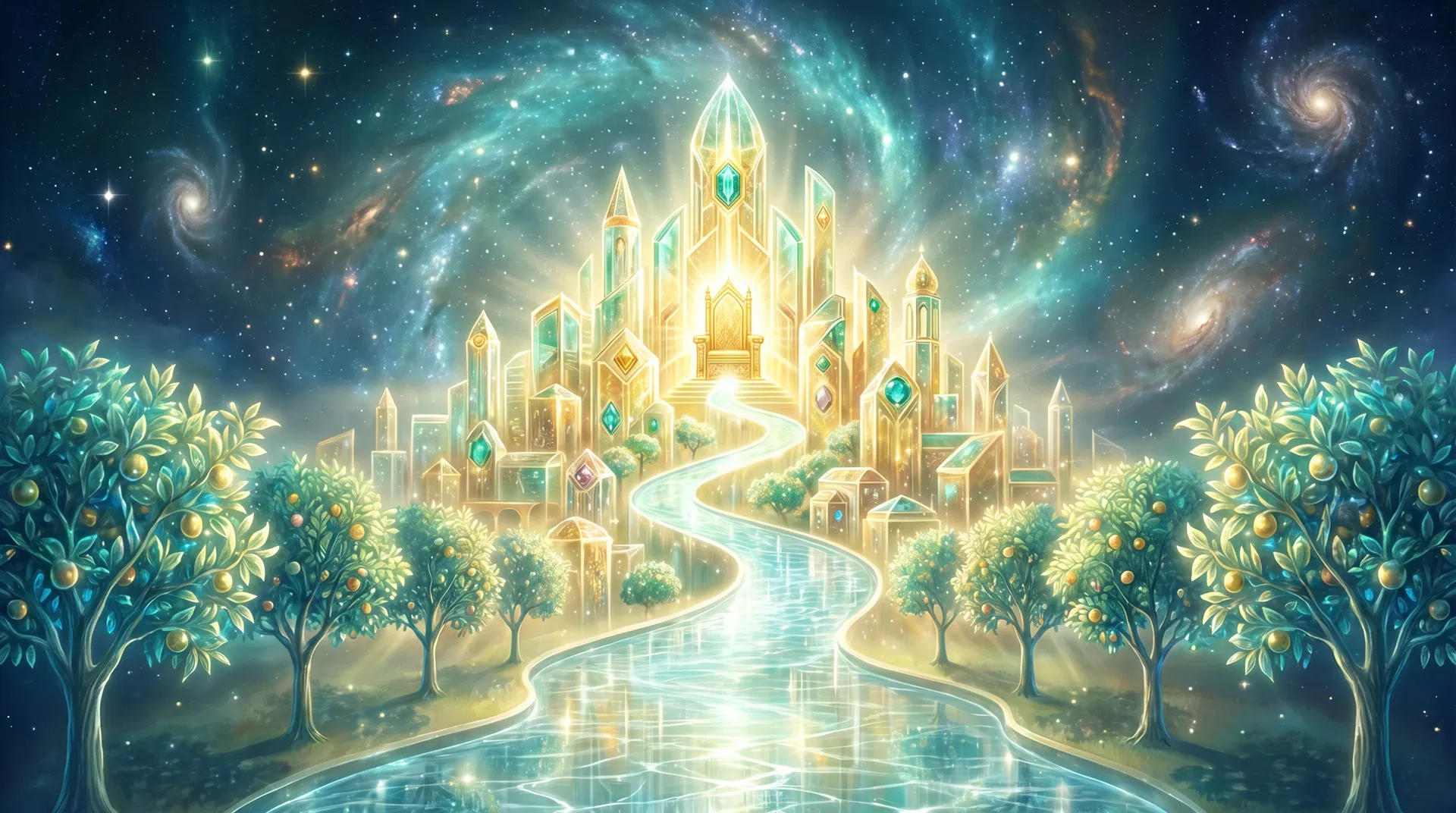
The New Heaven and New Earth — Revelation 21–22
The Bible does not end with judgment. It ends with a city. Revelation 21–22 describes the final destination of all of human history: a new heaven and a new earth, the Holy City New Jerusalem descending from God, the river of life, the Tree of Life, and the face of God seen at last. This verse-by-verse study of the last two chapters of Scripture explores what the eternal state actually looks like — and why it is far more physical, concrete, and glorious than most Christians imagine.
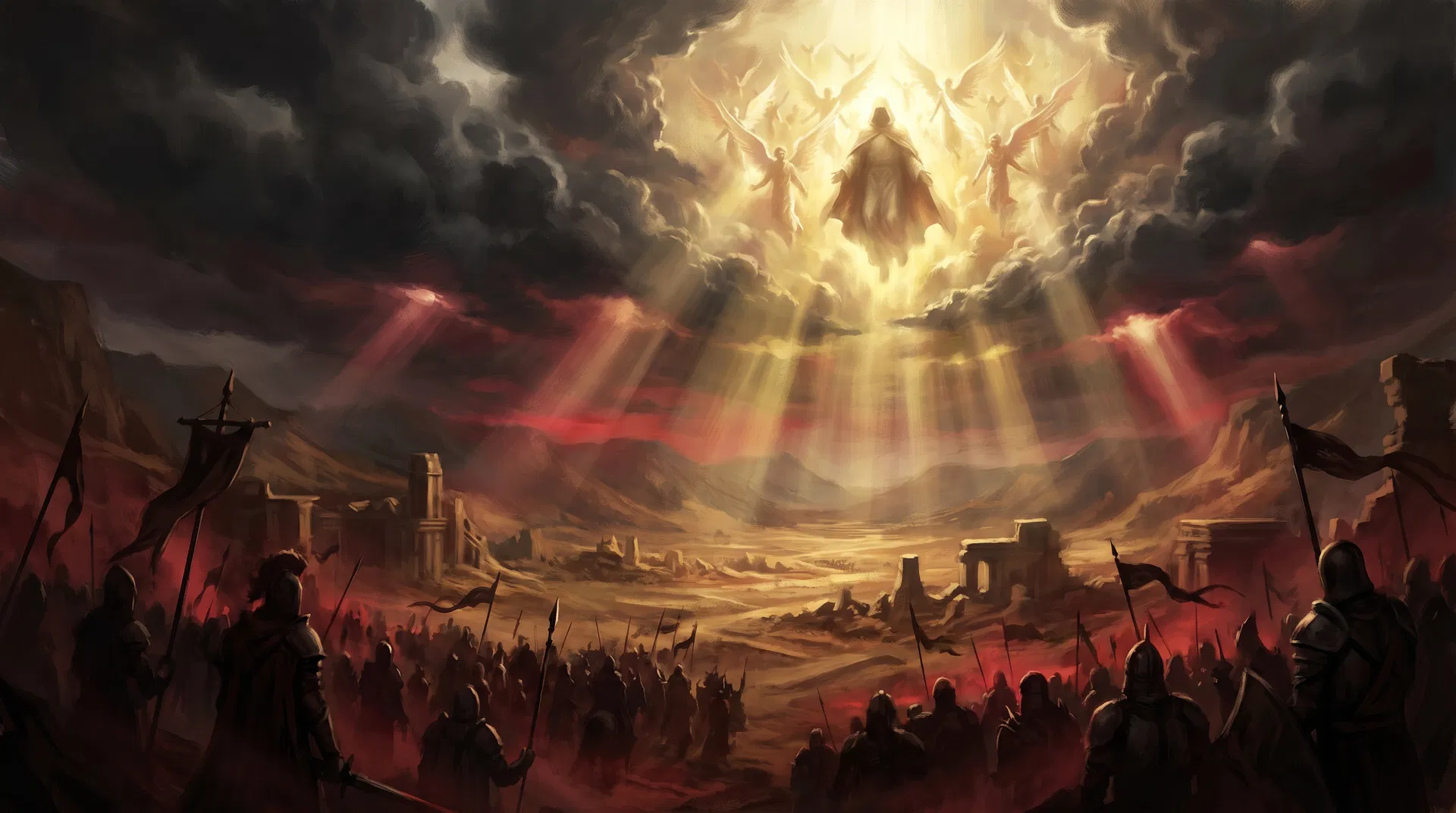
Armageddon and the Return of Christ — Zechariah 12–14 and Revelation 19
The final campaign of human history converges on a valley in northern Israel. Zechariah 12–14 and Revelation 19 describe the same climactic moment from two vantage points: the Old Testament prophet who saw it coming and the New Testament apostle who watched it unfold in vision. This verse-by-verse study traces the Battle of Armageddon, the mourning of Israel, and the glorious return of the King of kings.
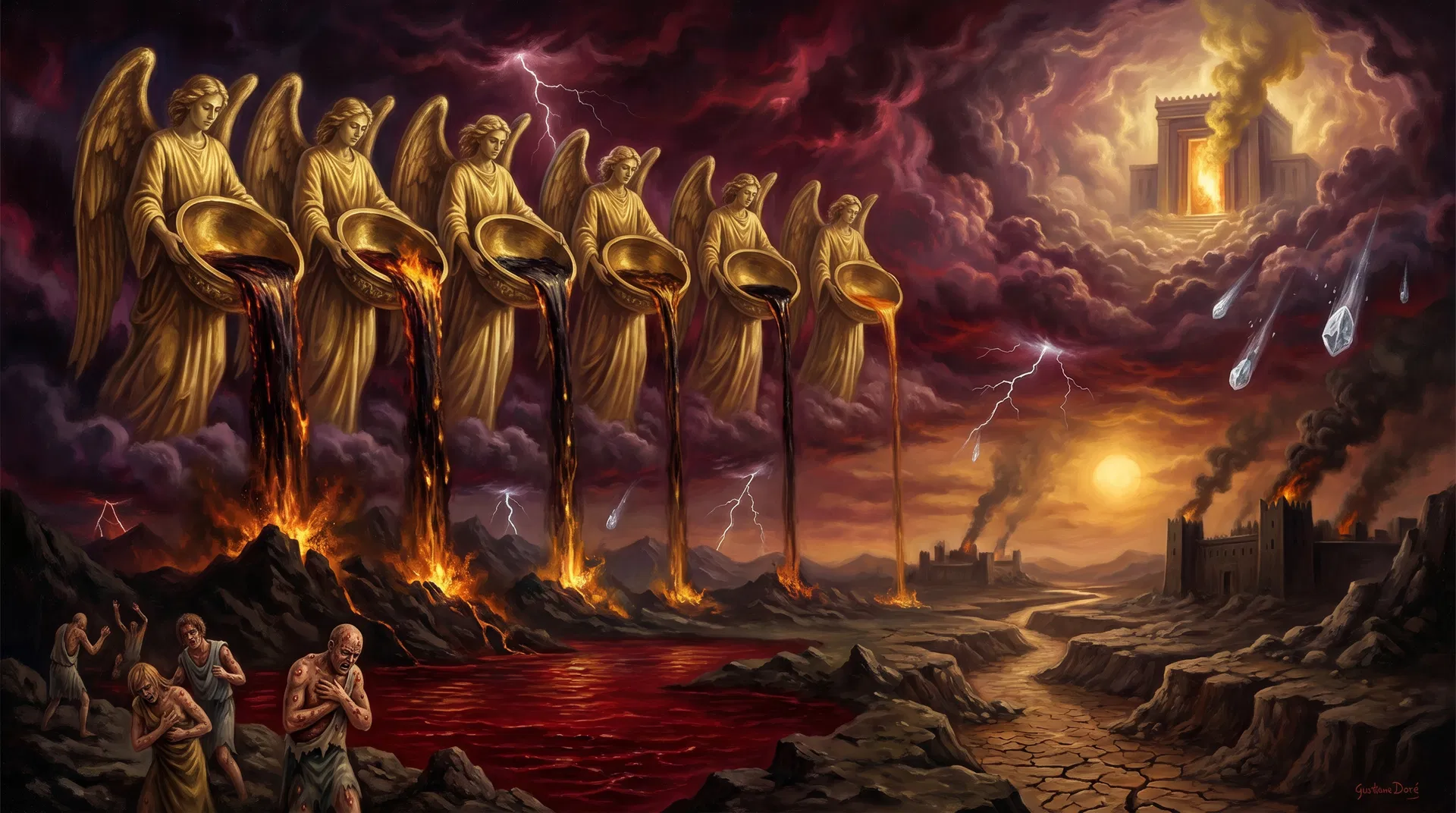
Revelation 15–16: The Seven Bowls of God’s Wrath
The seven bowls of Revelation 15–16 are the final, undiluted judgments of God — more severe than the seals and trumpets combined. This verse-by-verse study unpacks each bowl, the heavenly prelude in Revelation 15, the connection to the plagues of Exodus, and what these chapters reveal about the justice and holiness of God.
Reader Discussion
(0)Sign in to join the discussion.
No comments yet. Be the first to share your thoughts!
Continue Your Study
Explore the Bible with Scripture-grounded commentary, cross-references, and study tools.