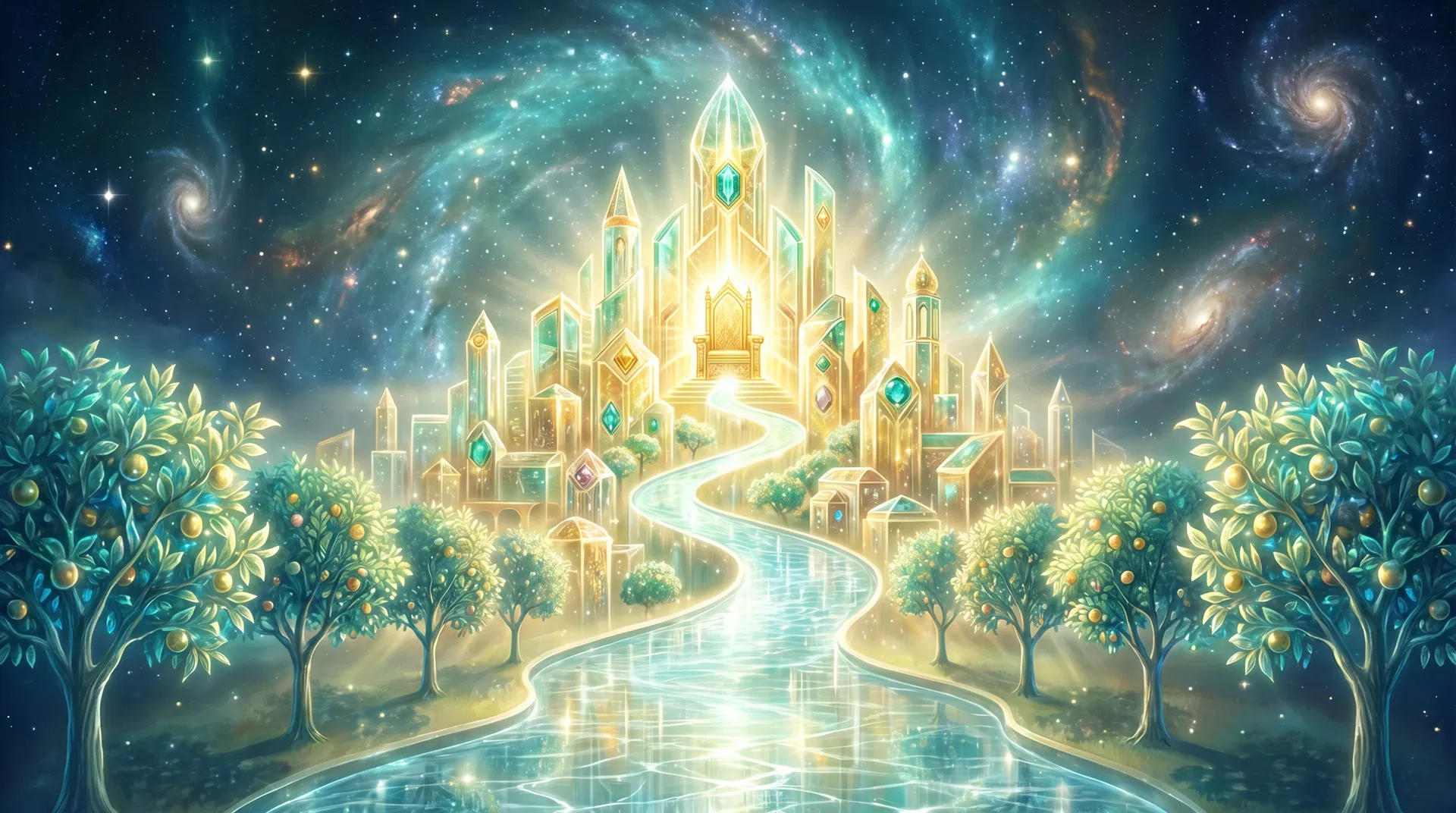
The New Heaven and New Earth — Revelation 21–22
The Bible does not end with judgment. It ends with a city. Revelation 21–22 describes the final destination of all of human history: a new heaven and a new earth, the Holy City New Jerusalem descending from God, the river of life, the Tree of Life, and the face of God seen at last. This verse-by-verse study of the last two chapters of Scripture explores what the eternal state actually looks like — and why it is far more physical, concrete, and glorious than most Christians imagine.
You are reading End Times Series — Part 12 of 12. You’ve completed the series!
The last two chapters of the Bible are the most important chapters you may never have studied carefully. Most Christians know Revelation for its seals, trumpets, and bowls — for the Antichrist, the Tribulation, and the Battle of Armageddon. But Revelation does not end in judgment. It ends in glory. Revelation 21–22 is the destination toward which all of Scripture has been moving since the first words of Genesis: the restoration of God's dwelling with His people, the healing of creation, and the face of God seen at last without a veil.
The New Heaven and New Earth (Revelation 21:1-8)
"Then I saw a new heaven and a new earth, for the first heaven and the first earth had passed away, and the sea was no more. And I saw the holy city, new Jerusalem, coming down out of heaven from God, prepared as a bride adorned for her husband." — Revelation 21:1-2 (ESV)
Read Revelation 21 in context
Open the full chapter with AI commentary, cross-references, and multiple translations — free, no account required.
The word translated "new" is the Greek kainos (καινός), which means renewed, transformed, or qualitatively different — not neos (νέος), which means brand new or recently created. This distinction matters enormously. The new heaven and new earth are not a replacement of creation but its redemption and transformation. Paul uses the same concept in Romans 8:19-21, where creation itself "waits with eager longing" for the revealing of the sons of God, and will be "set free from its bondage to corruption." Creation is not discarded; it is glorified.
The statement "the sea was no more" has puzzled readers for centuries. In Hebrew cosmology, the sea represented chaos, danger, and the realm of the dead. The sea gives up its dead in Revelation 20:13. Its absence in the new creation signifies the complete elimination of everything that threatens, destroys, or separates — a world of perfect order, peace, and wholeness.
The New Jerusalem descends "out of heaven from God" — it is not built by human hands but given by God. It is described as "a bride adorned for her husband," combining the imagery of a city and a community of people. The city is the dwelling of the people; the people are the inhabitants of the city. God's announcement in verse 3 is the fulfillment of the entire biblical story: "Behold, the dwelling place of God is with man. He will dwell with them, and they will be his people, and God himself will be with them as their God." The Greek word for "dwelling place" is skēnē (σκηνή) — the same root as the Hebrew mishkan, the tabernacle. The tabernacle in the wilderness, the temple in Jerusalem, the incarnation of Christ — all were anticipations of this moment.
Verse 4 contains the most comforting promise in all of Scripture: "He will wipe away every tear from their eyes, and death shall be no more, neither shall there be mourning, nor crying, nor pain anymore, for the former things have passed away." Every grief, every loss, every unanswered prayer, every injustice — all of it is addressed in this single verse. The one who wipes the tears is God Himself. This is not a distant administrative act but an intimate, personal gesture.
The New Jerusalem: Dimensions and Description (Revelation 21:9-27)
"The wall was built of jasper, while the city was pure gold, like clear glass. The foundations of the wall of the city were adorned with every kind of jewel." — Revelation 21:18-19 (ESV)
The New Jerusalem is described with extraordinary precision. Its dimensions are given as 12,000 stadia in length, width, and height — approximately 1,400 miles in each direction. Whether this describes a cube or a pyramid, the scale is staggering: a city that would stretch from New York to Denver, from the Canadian border to the Gulf of Mexico, and rise 1,400 miles into the sky. Some scholars take these dimensions symbolically (12 × 1,000 = completeness × fullness), but even symbolically they communicate a city of incomprehensible magnitude.
The city is made of "pure gold, like clear glass" — a material that does not exist in the present creation, suggesting a transformed physical reality. The twelve foundations are adorned with twelve precious stones corresponding to the twelve apostles, recalling the breastplate of the High Priest (Exodus 28:17-20) with its twelve stones representing the twelve tribes. The twelve gates are twelve pearls, each gate a single pearl — a detail that has captured the imagination of readers for two millennia.
Most significantly, "I saw no temple in the city, for its temple is the Lord God the Almighty and the Lamb" (verse 22). The entire history of the temple — from the tabernacle in the wilderness to Solomon's temple to the second temple to the Millennial temple of Ezekiel 40-48 — was always pointing beyond itself to the direct, unmediated presence of God. In the new creation, there is no need for a building to house God's presence because God's presence fills everything. "And the city has no need of sun or moon to shine on it, for the glory of God gives it light, and its lamp is the Lamb" (verse 23).
The nations walk by the light of the city, and the kings of the earth bring their glory into it (verse 24). This remarkable detail suggests that the new creation is not a static, uniform existence but a dynamic, diverse community — the redeemed from every nation bringing the best of their cultures, gifts, and creativity into the eternal city as an offering to God.
The River of Life and the Tree of Life (Revelation 22:1-5)
"Then the angel showed me the river of the water of life, bright as crystal, flowing from the throne of God and of the Lamb through the middle of the street of the city; also, on either side of the river, the tree of life with its twelve kinds of fruit, yielding its fruit each month. The leaves of the tree were for the healing of the nations." — Revelation 22:1-2 (ESV)
The final chapter of Scripture opens with two images that take the reader back to the first chapter of Scripture. The river flowing from the throne of God recalls the river flowing from Eden in Genesis 2:10-14. The Tree of Life, which was guarded by cherubim after the Fall (Genesis 3:24), now stands freely accessible on both banks of the river. The story of the Bible is the story of humanity's exile from the Tree of Life and God's redemptive plan to restore access to it — and here, at the end, the exile is over.
The river is "bright as crystal" — a detail that emphasizes purity and clarity, the opposite of the polluted waters of the Tribulation judgments. It flows "from the throne of God and of the Lamb," making the source of all life in the new creation the direct presence of God. The Tree of Life bears twelve kinds of fruit, yielding a different fruit each month — suggesting that the eternal state involves ongoing variety, discovery, and delight, not a static unchanging existence.
The phrase "the leaves of the tree were for the healing of the nations" (Greek: therapeia, θεραπεία) has generated significant discussion. If there is no more pain or death in the new creation, what requires healing? The most likely interpretation is that the word refers to the ongoing flourishing and vitality of the nations — the leaves sustain and enhance life rather than cure disease. The nations are not sick; they are thriving, and the Tree of Life is the source of that thriving.
"No longer will there be anything accursed" (verse 3). The curse of Genesis 3 — the thorns, the pain, the toil, the death — is completely reversed. "But the throne of God and of the Lamb will be in it, and his servants will worship him. They will see his face, and his name will be on their foreheads" (verses 3-4). Seeing the face of God is the ultimate promise of the entire Bible. In the Old Testament, no one could see God's face and live (Exodus 33:20). In the new creation, seeing His face is the normal, eternal experience of every redeemed person. This is the beatific vision — the direct, unmediated knowledge of God — that theologians have discussed for centuries, and Scripture promises it to every believer.
The Final Invitation (Revelation 22:6-21)
"The Spirit and the Bride say, 'Come.' And let the one who hears say, 'Come.' And let the one who is thirsty come; let the one who desires take the water of life without price." — Revelation 22:17 (ESV)
The final chapter of Scripture ends not with a warning but with an invitation. The Spirit and the Bride — the Holy Spirit and the church — extend the same call together: "Come." The water of life is offered "without price" — the Greek dōrean (δωρεάν) means freely, as a gift, without cost. This is the grace of God in its purest expression: the most valuable thing in the universe — eternal life in the presence of God — offered freely to anyone who is thirsty.
The book closes with a warning against adding to or taking from its words (verses 18-19), a final promise of Christ's imminent return ("Surely I am coming soon"), and the prayer of the church across all ages: "Amen. Come, Lord Jesus" (verse 20). The Greek word maranatha — "Our Lord, come!" — was the earliest prayer of the Christian church (1 Corinthians 16:22). It is the prayer with which the entire Bible ends.
The End of the Story Is the Beginning
Revelation 21–22 is not the end of the story. It is the beginning of the story that never ends. The new creation is not a static paradise but a dynamic, growing, exploring, worshiping community of redeemed humanity dwelling in the presence of God. The gifts and cultures of every nation are brought into the eternal city. The river of life flows and the Tree of Life bears fruit every month. God's servants worship Him and reign with Him forever (verse 5). There is always more to discover, more to explore, more to know of the God who is infinite.
The entire End Times series has traced the prophetic arc from the Rapture to the Tribulation to the Second Coming to the Millennium to the Great White Throne — and it all ends here, with God wiping every tear from every eye and making His home with His people forever. If you want to read these final chapters for yourself, open Revelation 21 in the Bible reader → [blocked] or read Revelation 22 → [blocked].
Recommended Resources
Heaven by Randy Alcorn — The most comprehensive evangelical treatment of the eternal state available. Alcorn argues persuasively from Revelation 21–22 that the new earth is a physical, redeemed creation — not a disembodied spiritual realm — and explores what everyday life in the new creation might actually look like.
The Revelation of Jesus Christ by John Walvoord — Walvoord's commentary on Revelation 21–22 is thorough and exegetically careful, with detailed attention to the dimensions of the New Jerusalem and the significance of each precious stone in the foundations.
Surprised by Hope by N.T. Wright — Wright's accessible treatment of resurrection and the new creation challenges the common notion of a disembodied heaven and argues from Scripture that the Christian hope is for the redemption of the physical creation, not escape from it. A valuable complement to Walvoord's dispensational perspective.
This is Part 12 of our twelve-part End Times series — the final installment. Go back to Part 11: The Millennium and the Great White Throne — Revelation 20 [blocked] or start the series from the beginning with Part 0: Introduction to End Times Prophecy [blocked].
Recommended Reading
Deepen your study with these hand-picked books related to this article.
The Difficult Passages in Revelation
Robert L. Furrow
Navigates the most challenging verses and topics in Revelation with biblical clarity and pastoral insight.
The Book of Signs
Dr. David Jeremiah
31 undeniable prophecies of the apocalypse, helping readers understand the signs of the end times.

The Second Coming
John MacArthur
MacArthur's definitive study of Christ's return — examining the signs, sequence, and significance of the Second Coming from Matthew 24 and Revelation 19.
As an Amazon Associate, Bible Compass earns from qualifying purchases.
Get the 7-Day Holy Week Devotional
Palm Sunday → Resurrection Sunday — free, delivered to your inbox
Related Articles
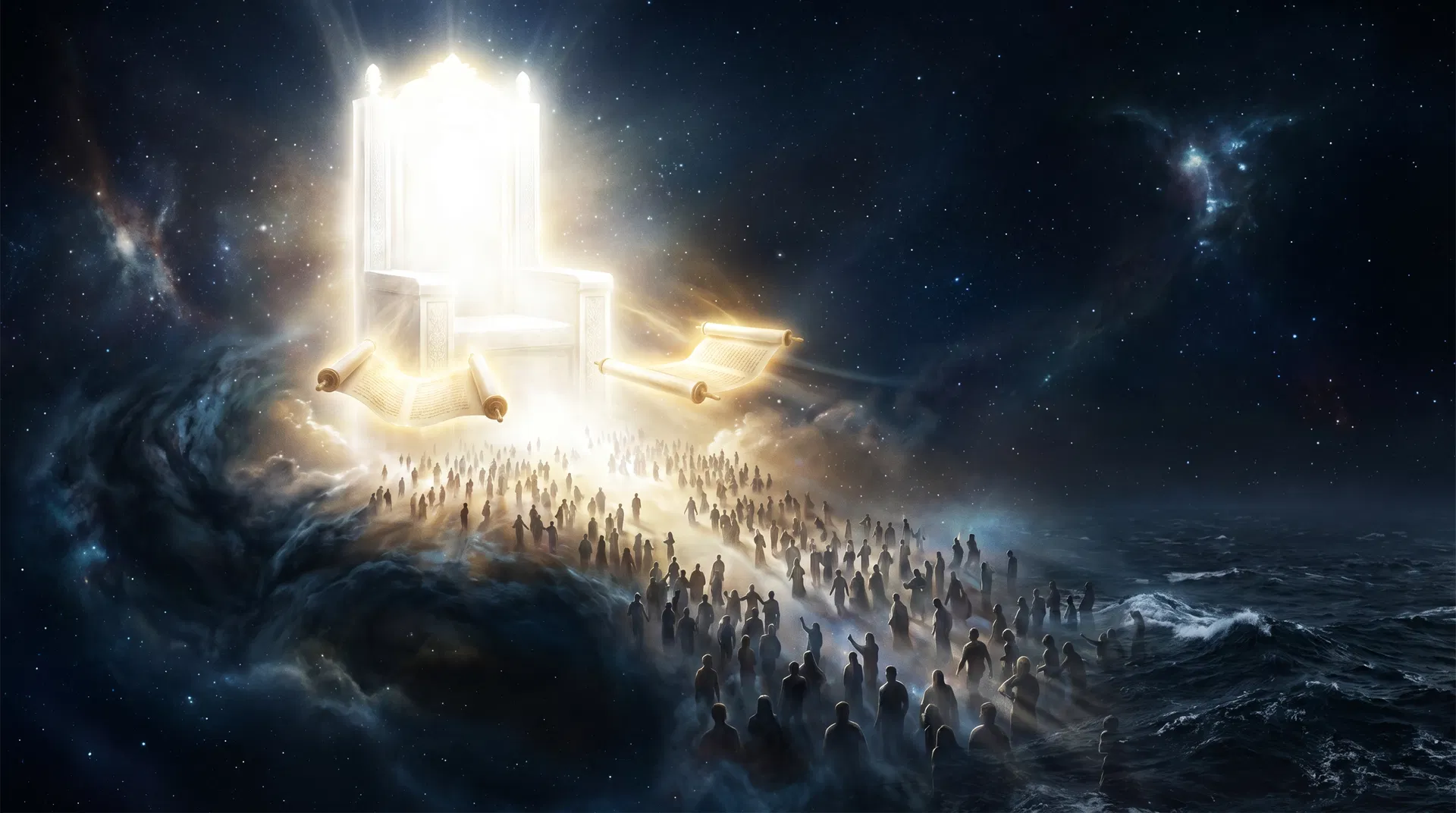
The Millennium and the Great White Throne — Revelation 20
Between the Second Coming and the eternal state stands a thousand years. Revelation 20 describes the binding of Satan, the first resurrection, the Millennial reign of Christ, the final rebellion, and the Great White Throne Judgment — the most comprehensive account of the end of history in all of Scripture. This verse-by-verse study examines what the Millennium is, who reigns during it, and what the Great White Throne means for every human being who has ever lived.
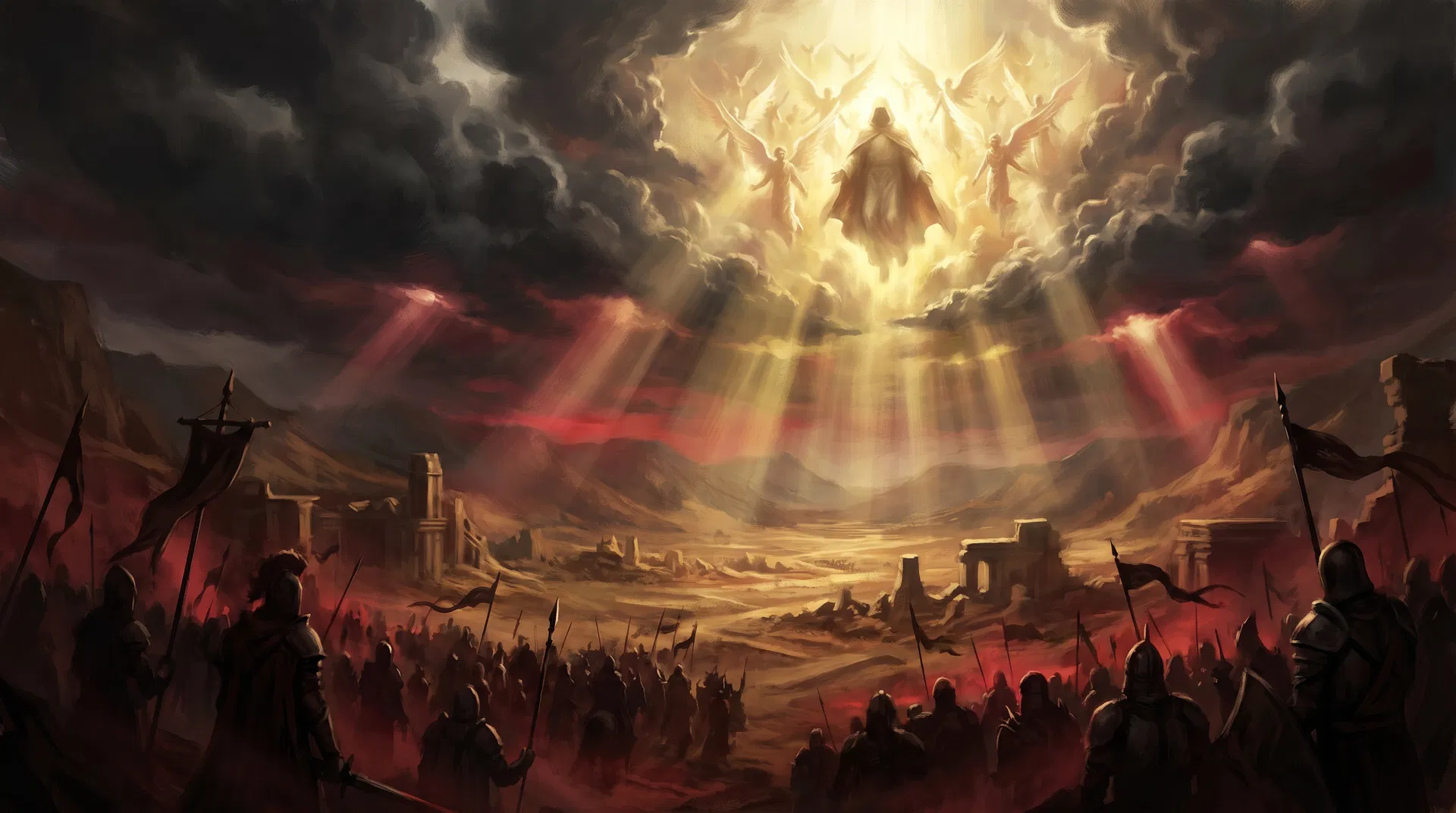
Armageddon and the Return of Christ — Zechariah 12–14 and Revelation 19
The final campaign of human history converges on a valley in northern Israel. Zechariah 12–14 and Revelation 19 describe the same climactic moment from two vantage points: the Old Testament prophet who saw it coming and the New Testament apostle who watched it unfold in vision. This verse-by-verse study traces the Battle of Armageddon, the mourning of Israel, and the glorious return of the King of kings.
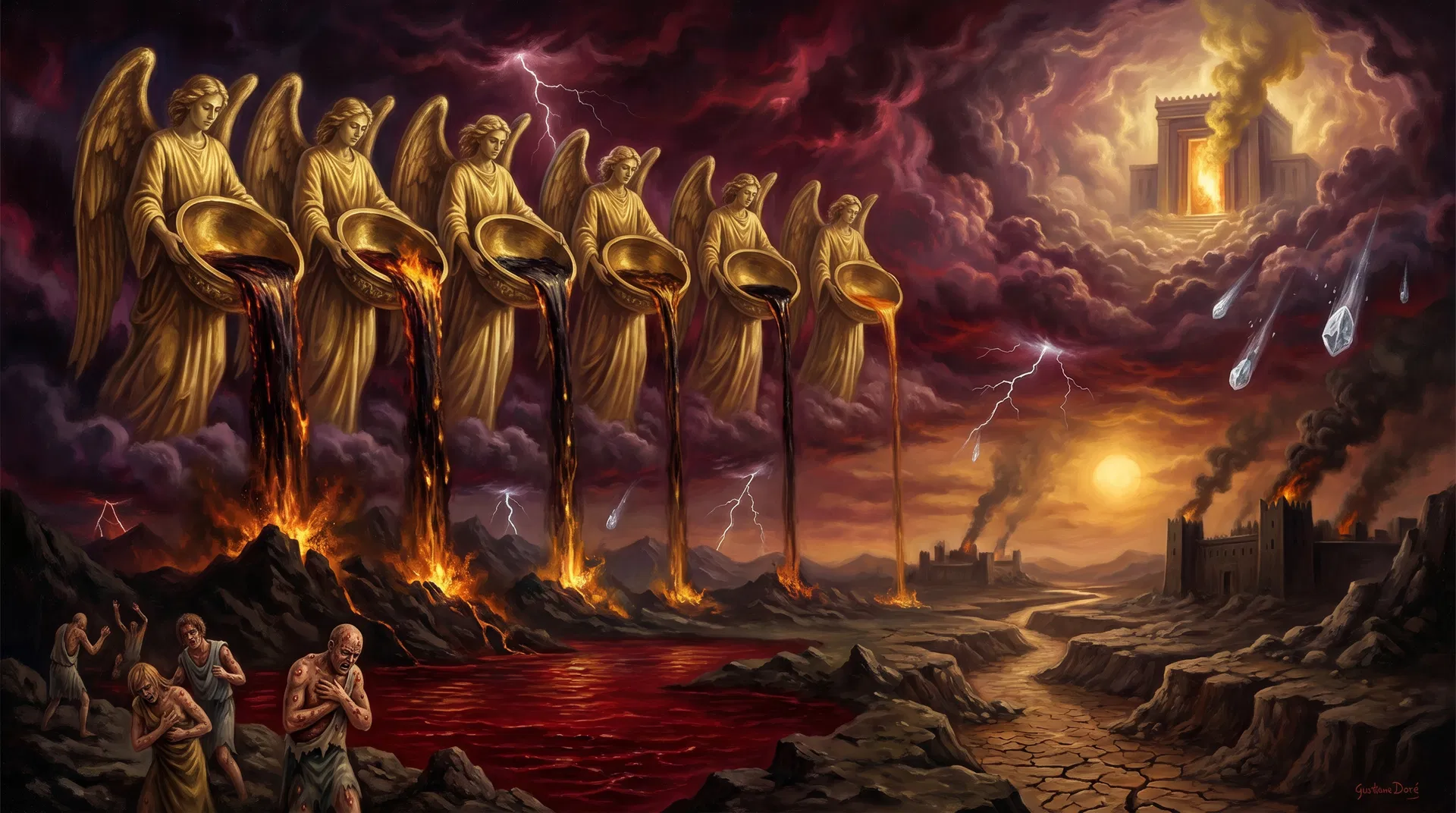
Revelation 15–16: The Seven Bowls of God’s Wrath
The seven bowls of Revelation 15–16 are the final, undiluted judgments of God — more severe than the seals and trumpets combined. This verse-by-verse study unpacks each bowl, the heavenly prelude in Revelation 15, the connection to the plagues of Exodus, and what these chapters reveal about the justice and holiness of God.
Reader Discussion
(0)Sign in to join the discussion.
No comments yet. Be the first to share your thoughts!
Continue Your Study
Explore the Bible with Scripture-grounded commentary, cross-references, and study tools.