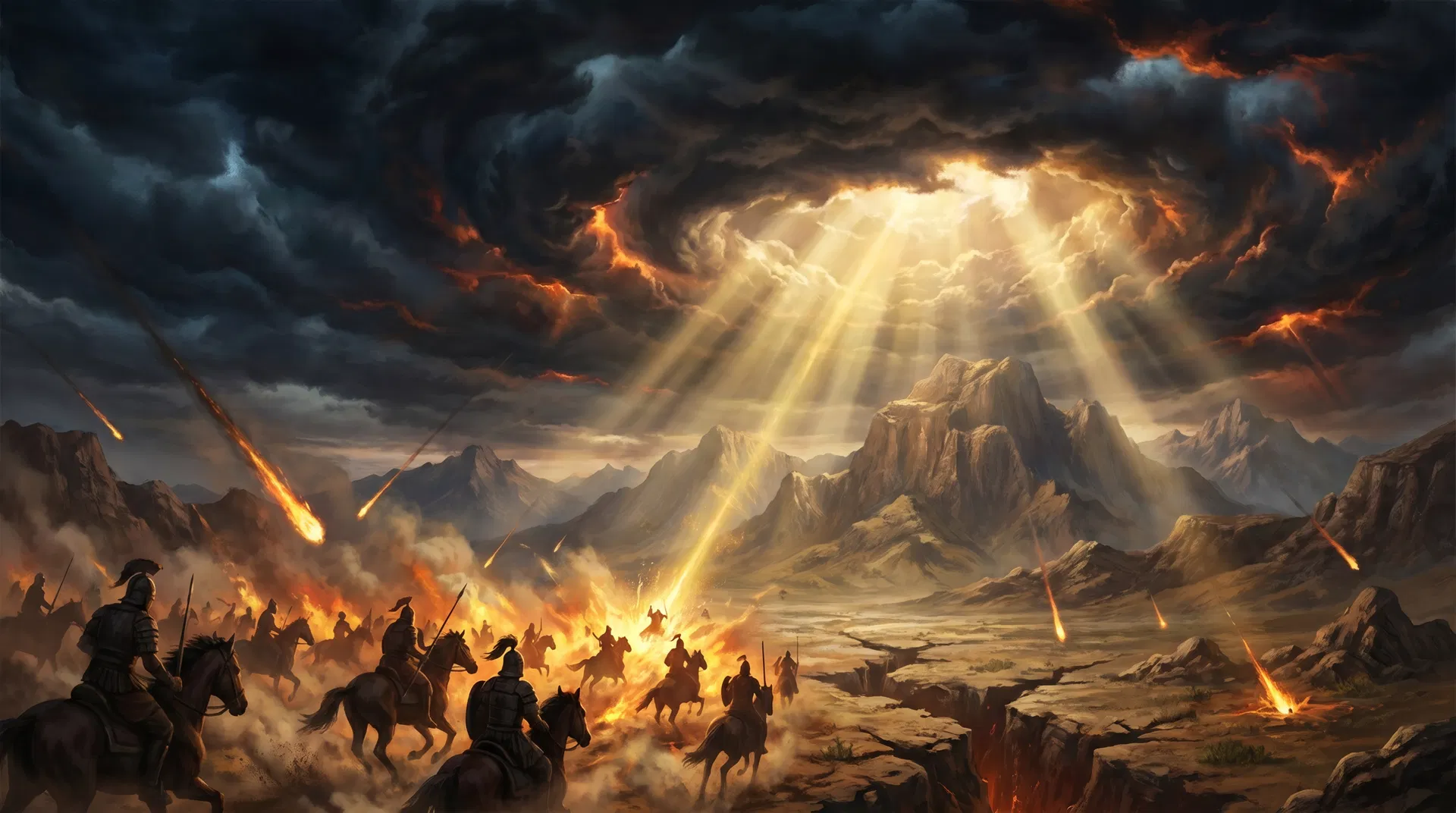
Ezekiel 38–39: Gog, Magog, and the Great Northern Invasion
Few passages in the Old Testament have generated more prophetic interest than Ezekiel 38–39. This verse-by-verse study unpacks the identity of Gog and Magog, the coalition of nations, God’s supernatural defeat of the invasion, and how this prophecy relates to Revelation 20 and the modern geopolitical landscape.
You are reading End Times Series — Part 7 of 12. Parts 8–13 are already published.
In Part 6 of this series [blocked] we examined Revelation 13 and the rise of the Antichrist and the False Prophet. In this article we step back to the Old Testament to examine one of the most dramatic prophetic passages in all of Scripture — Ezekiel 38–39 — and the vision of a massive military invasion of Israel that is supernaturally defeated by God Himself. This is Part 7 of our twelve-part End Times series [blocked].
Who Is Gog? Who Is Magog? (Ezekiel 38:1–6)
"The word of the Lord came to me: ‘Son of man, set your face toward Gog, of the land of Magog, the chief prince of Meshech and Tubal, and prophesy against him.’" — Ezekiel 38:1–2 (ESV)
Read Ezekiel 38 in context
Open the full chapter with AI commentary, cross-references, and multiple translations — free, no account required.
The passage opens with God directing Ezekiel to prophesy against "Gog of the land of Magog." This is the first and most contested interpretive question in the passage: who are Gog and Magog?
Magog appears in Genesis 10:2 as one of the sons of Japheth, Noah’s son. The first-century Jewish historian Josephus identified Magog with the Scythians — fierce nomadic warriors who inhabited the steppes north of the Black Sea, in the region of modern-day Russia and Central Asia. This identification has been broadly accepted in the history of biblical interpretation.
Gog is not a personal name found elsewhere in the genealogies. Most scholars treat it as a title — the ruler or prince of the land of Magog. The Hebrew phrase translated "chief prince" uses the word rosh (רֹאשׁ), meaning "head" or "chief." Some interpreters have connected "Rosh" to Russia, though this is linguistically disputed. What is not disputed is the geographical direction: Ezekiel 38:15 explicitly states that Gog comes "from your place in the uttermost parts of the north." From the perspective of Israel, the uttermost north points toward the region of modern Russia.
The coalition in Ezekiel 38:5–6 includes Persia (Iran), Cush (Ethiopia/Sudan), Put (Libya), Gomer (Turkey/Eastern Europe), and Beth-togarmah (Turkey/Armenia). Many contemporary scholars note that this alignment — a northern power allied with Iran, Turkey, Ethiopia, and Libya — has become increasingly plausible in the modern era, as Russia, Iran, and Turkey have formed significant strategic relationships.
If you find this kind of verse-by-verse commentary helpful, Bible Compass provides in-depth commentary for every passage in the Bible. Explore Ezekiel verse by verse →
The Timing of the Invasion (Ezekiel 38:8–12)
"After many days you will be mustered. In the latter years you will go against the land that is restored from war, the land whose people were gathered from many peoples upon the mountains of Israel, which had been a continual waste. Its people were brought out from the peoples and now dwell securely, all of them." — Ezekiel 38:8 (ESV)
The timing phrase "in the latter years" (Hebrew: b’acharit hashanim) is prophetic language for the end of the age — the same phrase used in Daniel 10:14. The passage describes Israel as a nation that has been restored from war, gathered from many peoples, and dwelling securely. The 1948 re-establishment of the State of Israel and the subsequent return of Jewish people from over 100 nations is widely seen by evangelical scholars as the fulfillment of the "gathering" described here.
God’s Purpose in the Invasion (Ezekiel 38:14–16)
"In the latter days I will bring you against my land, that the nations may know me, when through you, O Gog, I vindicate my holiness before their eyes." — Ezekiel 38:16 (ESV)
This is one of the most theologically important verses in the passage. God says He will "bring" Gog against the land — not merely permit the invasion, but sovereignly orchestrate it. The purpose is explicitly stated: "that the nations may know me." This is the same divine purpose that runs through the plagues of Egypt (Exodus 7:5), the crossing of the Jordan (Joshua 4:24), and the defeat of Goliath (1 Samuel 17:46). God uses the arrogance of His enemies as the stage on which He displays His glory.
Gog’s motivation is described in Ezekiel 38:12 as a desire to "seize spoil and carry off plunder" — to take "silver and gold, livestock and goods, great spoil." The invasion is economically motivated, driven by the wealth of a restored and prosperous Israel.
The Divine Defeat of Gog (Ezekiel 38:17–39:6)
"For in my jealousy and in my blazing wrath I declare, On that day there shall be a great earthquake in the land of Israel... And the mountains shall be thrown down, and the cliffs shall fall, and every wall shall tumble to the ground." — Ezekiel 38:19–20 (ESV)
God’s response to the invasion is total and overwhelming. He does not call Israel’s army to fight — He fights for Israel directly, using five instruments of judgment: a great earthquake (38:19–20) so powerful that mountains collapse; confusion and infighting among the coalition (38:21); pestilence and bloodshed (38:22); torrential rain and hailstones (38:22); and fire and brimstone (38:22) — language echoing the destruction of Sodom and Gomorrah (Genesis 19:24).
The result is the near-total annihilation of the invading force. The aftermath is described in vivid detail: seven months of burying the dead (39:12–14), seven years of burning the weapons as fuel (39:9–10), and birds and wild animals summoned to feast on the fallen army (39:17–20) — language that reappears in Revelation 19:17–18 at the Battle of Armageddon.
The Aftermath: Israel’s National Awakening (Ezekiel 39:21–29)
"The house of Israel shall know that I am the Lord their God, from that day forward." — Ezekiel 39:22 (ESV)
The defeat of Gog is not merely a military event — it is a theological turning point. God declares that after this event, Israel will "know that I am the Lord their God." This language of national recognition echoes Zechariah 12:10, where Israel looks on "him whom they have pierced" and mourns — widely understood as describing Israel’s national conversion at the Second Coming.
Ezekiel 39:25–29 then describes a comprehensive restoration of Israel: God will "restore the fortunes of Jacob," gather them from the nations, and pour out His Spirit on the house of Israel. This is the same Spirit-outpouring promised in Joel 2:28–29 and partially fulfilled at Pentecost (Acts 2:16–21), but here applied to the nation of Israel in its fullness.
How Does Gog-Magog Relate to Revelation 20?
One of the most debated questions in eschatology is the relationship between Ezekiel 38–39 and Revelation 20:7–9, which also mentions "Gog and Magog" in a battle at the end of the Millennium. Most dispensational scholars see these as two distinct events: Ezekiel 38–39 describes a specific coalition war in the end times (likely before or at the start of the Tribulation), while Revelation 20 uses "Gog and Magog" as a symbolic name for the final global rebellion of all nations after the Millennium. John borrows Ezekiel’s imagery to describe a similar pattern — nations rising against God’s people and being supernaturally defeated — but the scale is different: Ezekiel’s coalition is a specific group of identifiable nations, while Revelation 20’s rebellion comes from "the four corners of the earth."
Application
First, the Gog-Magog prophecy is a reminder that God is sovereign over geopolitics. The nations that Ezekiel named are not gathering because of random historical forces. God declares in Ezekiel 38:16 that He will bring Gog against the land. The most powerful military coalitions in history are instruments in the hand of the God who created the nations. This is not a reason for passivity — it is a reason for confidence. The same God who orchestrates the movements of nations is the God who hears your prayers.
Second, the purpose of the Gog-Magog war is the knowledge of God. Three times in Ezekiel 38–39, God states that the purpose of this event is "that the nations may know me" (38:16, 38:23, 39:6). Every prophetic passage, rightly understood, ends at the same destination: the glory of God.
Third, Israel’s future is secure. Ezekiel 39:28–29 ends with a promise: God will gather Israel from the nations, leave none behind, and pour out His Spirit on them. The God who keeps His word to Israel is the God who keeps His word to you.
Call to Action
The prophecies of Ezekiel 38–39 are not meant to generate anxiety about geopolitical headlines — they are meant to anchor your confidence in the God who governs history. If you want to study these chapters verse by verse, Bible Compass provides in-depth commentary, cross-references, and historical context for every passage in Ezekiel and across all 66 books of the Bible.
Study Ezekiel verse by verse →
The Book of Signs by Dr. David Jeremiah — A comprehensive guide to 31 undeniable prophecies of the apocalypse, including a detailed treatment of the Gog-Magog war and its place in the prophetic timeline.
Epicenter by Joel C. Rosenberg — A New York Times bestselling analysis of Ezekiel 38–39 and its connection to modern geopolitics in Russia, Iran, and the Middle East.
Things to Come by J. Dwight Pentecost — The definitive dispensational systematic treatment of biblical prophecy, with extensive chapters on the Gog-Magog war, its timing, and its relationship to the Tribulation and the Millennium.
This is Part 7 of our twelve-part End Times series. Go back to Part 6: Revelation 13 — The Beast, the False Prophet, and the Mark of 666 [blocked] or continue to Part 8: The Seven Trumpets — Revelation 8–9 [blocked].
Recommended Reading
Deepen your study with these hand-picked books related to this article.
The Difficult Passages in Revelation
Robert L. Furrow
Navigates the most challenging verses and topics in Revelation with biblical clarity and pastoral insight.
The Book of Signs
Dr. David Jeremiah
31 undeniable prophecies of the apocalypse, helping readers understand the signs of the end times.

The Second Coming
John MacArthur
MacArthur's definitive study of Christ's return — examining the signs, sequence, and significance of the Second Coming from Matthew 24 and Revelation 19.
As an Amazon Associate, Bible Compass earns from qualifying purchases.
Get the 7-Day Holy Week Devotional
Palm Sunday → Resurrection Sunday — free, delivered to your inbox
Related Articles
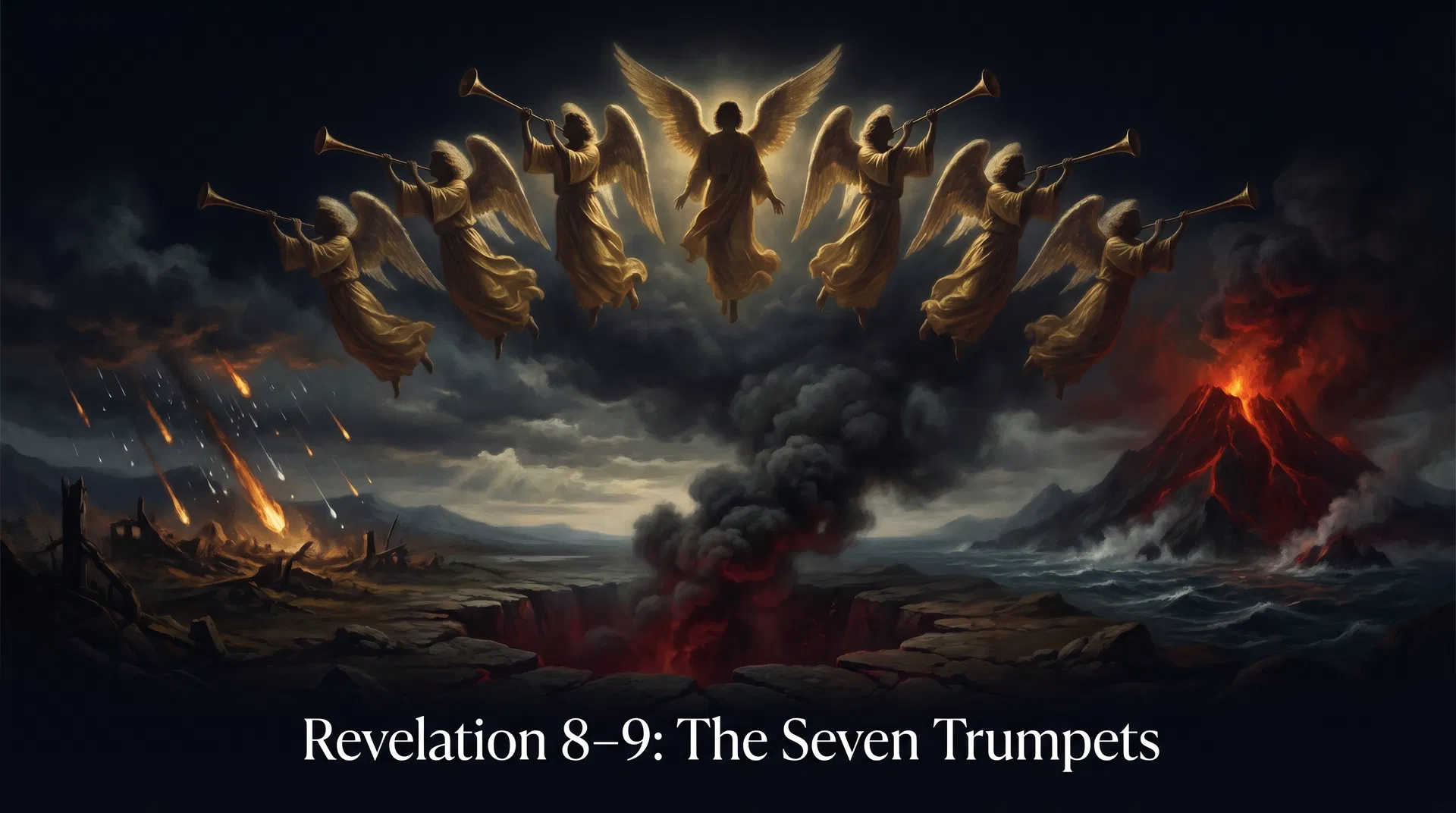
Revelation 8–9: The Seven Trumpets — God’s Escalating Warnings to a Rebellious World
The seven trumpets of Revelation 8–9 represent a dramatic escalation of divine judgment during the Tribulation — hail and fire, demonic locusts, and an army of two hundred million. Discover what each trumpet means and why humanity still refuses to repent.
Revelation 13: The Beast, the False Prophet, and the Mark of 666
Few chapters in the Bible have generated more debate than Revelation 13. This verse-by-verse study unpacks the Beast from the Sea, the False Prophet, and the infamous mark of 666 — with original Greek insights, historical context, and practical application for believers today.

The New Heaven and New Earth — Revelation 21–22
The Bible does not end with judgment. It ends with a city. Revelation 21–22 describes the final destination of all of human history: a new heaven and a new earth, the Holy City New Jerusalem descending from God, the river of life, the Tree of Life, and the face of God seen at last. This verse-by-verse study of the last two chapters of Scripture explores what the eternal state actually looks like — and why it is far more physical, concrete, and glorious than most Christians imagine.
Reader Discussion
(0)Sign in to join the discussion.
No comments yet. Be the first to share your thoughts!
Continue Your Study
Explore the Bible with Scripture-grounded commentary, cross-references, and study tools.