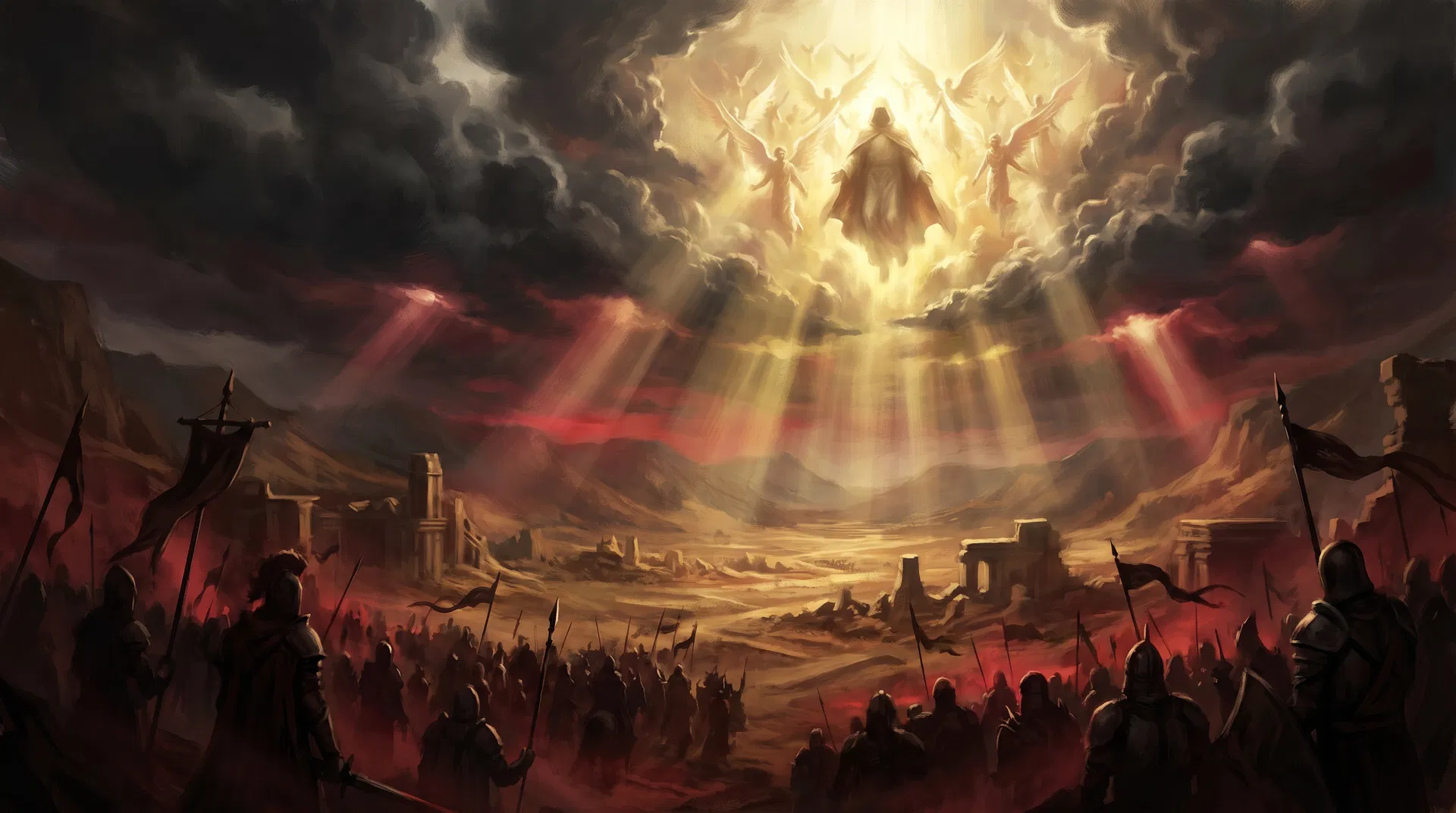
Armageddon and the Return of Christ — Zechariah 12–14 and Revelation 19
The final campaign of human history converges on a valley in northern Israel. Zechariah 12–14 and Revelation 19 describe the same climactic moment from two vantage points: the Old Testament prophet who saw it coming and the New Testament apostle who watched it unfold in vision. This verse-by-verse study traces the Battle of Armageddon, the mourning of Israel, and the glorious return of the King of kings.
You are reading End Times Series — Part 10 of 12. Parts 11–13 are already published.
Every major battle in the Old Testament was a rehearsal. Megiddo saw the death of King Josiah. The Jezreel Valley watched the armies of Assyria, Egypt, and Babylon march through its wide plain. But the prophets looked past all of these to a final confrontation — a moment when every nation on earth would converge on the land of Israel, and God Himself would intervene. Zechariah 12–14 and Revelation 19 describe this same climactic event from two perspectives separated by six centuries. Together they form the most detailed prophetic account of the end of human history in all of Scripture.
Zechariah 12: The Siege of Jerusalem and the Spirit of Grace
"And on that day I will seek to destroy all the nations that come against Jerusalem. And I will pour out on the house of David and the inhabitants of Jerusalem a spirit of grace and pleas for mercy, so that, when they look on me, on him whom they have pierced, they shall mourn for him, as one mourns for an only child." — Zechariah 12:9-10 (ESV)
Read Revelation 19 in context
Open the full chapter with AI commentary, cross-references, and multiple translations — free, no account required.
Zechariah 12 opens with a declaration that God will make Jerusalem "a cup of staggering" and "a heavy stone" for all the surrounding peoples. The Hebrew word for "staggering" is ra'al (רַעַל), used elsewhere to describe the disorienting effect of a poison or a curse. The nations that attempt to lift this stone will injure themselves. This is not a description of Israel's military superiority but of divine protection: God Himself will be Jerusalem's defender.
The climax of the chapter is verse 10, one of the most theologically stunning verses in the entire Old Testament. God speaks in the first person — "they will look on me, the one they have pierced" — and then shifts to the third person: "they will mourn for him as one mourns for an only child." This grammatical shift has puzzled commentators for centuries. The most natural explanation, and the one confirmed by the New Testament, is that this is a Trinitarian statement: God the Father speaks of God the Son. John 19:37 quotes this verse directly in reference to the Roman soldier piercing Jesus's side at the crucifixion. Revelation 1:7 applies it to the Second Coming: "every eye will see him, even those who pierced him."
The mourning described in Zechariah 12:11-14 is not the grief of defeat but the grief of recognition — the profound, national repentance of Israel when they see the one they rejected and understand who He truly was. The comparison to "the mourning at Hadad-rimmon in the plain of Megiddo" refers to the national lamentation over King Josiah's death (2 Chronicles 35:24-25), the greatest corporate grief in Israel's history. The coming mourning will surpass even that.
Zechariah 13: The Fountain Opened and the Shepherd Struck
"On that day there shall be a fountain opened for the house of David and the inhabitants of Jerusalem, to cleanse them from sin and uncleanness." — Zechariah 13:1 (ESV)
Immediately following the national mourning of chapter 12, Zechariah describes a "fountain opened" for cleansing. The sequence is deliberate: recognition leads to repentance, and repentance leads to cleansing. This is the fulfillment of the New Covenant promise of Jeremiah 31:31-34 — the writing of God's law on human hearts and the forgiveness of sins. The fountain is not a ritual bath but a divine act of grace, available to the entire nation.
Zechariah 13:7 contains a prophecy Jesus quoted directly on the night of His arrest: "Strike the shepherd, and the sheep will be scattered." In Matthew 26:31, Jesus told His disciples that they would all fall away that night, citing this verse. But the verse continues: "I will turn my hand to the little ones" — a promise of restoration. The scattering of the disciples at the crucifixion was not the end of the story; it was the beginning of the fulfillment of the shepherd's redemptive work.
Zechariah 14: The Day of the Lord and the Mount of Olives
"On that day his feet shall stand on the Mount of Olives that lies before Jerusalem on the east, and the Mount of Olives shall be split in two from east to west by a very wide valley, so that one half of the Mount shall move northward, and the other half southward." — Zechariah 14:4 (ESV)
Zechariah 14 describes the most dramatic topographical event in prophetic Scripture. When Christ returns, His feet will touch the Mount of Olives — the same mountain from which He ascended (Acts 1:11-12) — and the mountain will split in two, creating a great valley for the escape of Jerusalem's survivors. The angel who spoke to the disciples at the Ascension said He would return "in the same way you saw him go into heaven." The return is to the same location, in the same manner: bodily, visibly, from the east.
The chapter describes the transformation of the entire region: living waters will flow from Jerusalem year-round (verse 8), and the surrounding land will be leveled into a plain while Jerusalem is elevated (verse 10). The nations that fought against Jerusalem will be struck with a plague (verse 12), and the survivors from all nations will come to Jerusalem year after year to worship the King and celebrate the Feast of Tabernacles (verse 16). This is the beginning of the Millennial Kingdom — the thousand-year reign of Christ described in Revelation 20.
Revelation 19: The Rider on the White Horse
"Then I saw heaven opened, and behold, a white horse! The one sitting on it is called Faithful and True, and in righteousness he judges and makes war. His eyes are like a flame of fire, and on his head are many diadems, and he has a name written that no one knows but himself. He is clothed in a robe dipped in blood, and the name by which he is called is The Word of God." — Revelation 19:11-13 (ESV)
Revelation 19 opens with the great hallelujah chorus of heaven celebrating the fall of Babylon (chapters 17-18) and the announcement of the marriage supper of the Lamb. Then heaven opens. The rider on the white horse is identified by four names: Faithful and True (His character), a name no one knows (His transcendent mystery), the Word of God (His identity as the eternal Son, echoing John 1:1), and King of kings and Lord of lords (His authority). The robe dipped in blood recalls Isaiah 63:1-3, where God treads the winepress of His wrath — but here the blood is His own, shed at Calvary, now worn as the emblem of His victory.
The armies of heaven follow Him on white horses, clothed in fine white linen — the same linen described as "the righteous deeds of the saints" in verse 8. These are the glorified believers, returning with Christ to witness His triumph. The sharp sword coming from His mouth (verse 15) is the word of God — the same instrument by which creation was spoken into existence and by which the final judgment is executed. He does not need a physical weapon; His word is sufficient.
The Antichrist and the false prophet are captured and thrown alive into "the lake of fire that burns with sulfur" (verse 20) — the first occupants of this final place of judgment, arriving there a thousand years before the general resurrection and the Great White Throne Judgment of Revelation 20. The remaining armies are slain by the word of Christ, and the birds of the air feast on the carnage in the grim fulfillment of the "great supper of God" (verse 17-18).
The Convergence of Old and New Testament Prophecy
What makes Zechariah 12–14 and Revelation 19 so remarkable is not just their content but their convergence. Written six centuries apart, by different authors, in different languages, for different audiences, they describe the same event with complementary details. Zechariah provides the ground-level view: the siege of Jerusalem, the mourning of Israel, the splitting of the Mount of Olives, the living waters. Revelation provides the heavenly view: the rider on the white horse, the armies of heaven, the capture of the Antichrist, the birds of prey. Together they form a stereoscopic picture of the most consequential moment in human history.
This kind of prophetic convergence is one of the strongest arguments for the divine inspiration of Scripture. No human conspiracy could coordinate these details across six centuries of history, two languages, and two entirely different literary genres. The historical reliability of the Bible's prophetic record [blocked] has been confirmed repeatedly by archaeology and fulfilled prophecy — and the prophecies of Zechariah and Revelation remain among the most specific and verifiable in all of Scripture.
If you want to read these passages for yourself with verse-by-verse commentary, Bible Compass provides access to all five major translations alongside cross-references and study notes. Read Zechariah 14 → [blocked] or Read Revelation 19 → [blocked]
Recommended Resources
The Second Coming: Signs of Christ's Return and the End of the Age by John MacArthur — MacArthur's thorough treatment of the Second Coming draws heavily from both Zechariah and Revelation, with careful attention to the literal fulfillment of Old Testament prophecy. An essential resource for understanding how the two Testaments converge on this event.
Zechariah by Charles Feinberg — Feinberg's commentary on Zechariah is the standard evangelical reference for chapters 12–14, with detailed Hebrew exegesis and a clear premillennial framework that takes the prophecies at face value.
The End Times in Chronological Order by Ron Rhodes — Accessible and well-organized guide to the entire prophetic timeline, with a dedicated chapter on Armageddon and the Second Coming that harmonizes Zechariah, Daniel, and Revelation into a coherent sequence.
This is Part 10 of our twelve-part End Times series. Go back to Part 9: The Seven Bowls — Revelation 15–16 [blocked] or continue to Part 11: The Millennium and the Great White Throne — Revelation 20 [blocked].
Recommended Reading
Deepen your study with these hand-picked books related to this article.
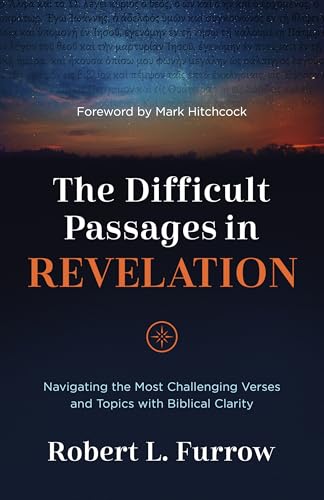
The Difficult Passages in Revelation
Robert L. Furrow
Navigates the most challenging verses and topics in Revelation with biblical clarity and pastoral insight.
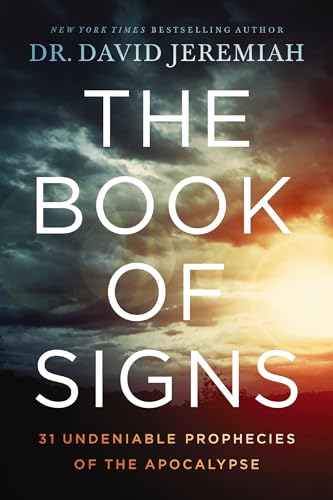
The Book of Signs
Dr. David Jeremiah
31 undeniable prophecies of the apocalypse, helping readers understand the signs of the end times.

The Second Coming
John MacArthur
MacArthur's definitive study of Christ's return — examining the signs, sequence, and significance of the Second Coming from Matthew 24 and Revelation 19.
As an Amazon Associate, Bible Compass earns from qualifying purchases.
Get the 7-Day Holy Week Devotional
Palm Sunday → Resurrection Sunday — free, delivered to your inbox
Related Articles
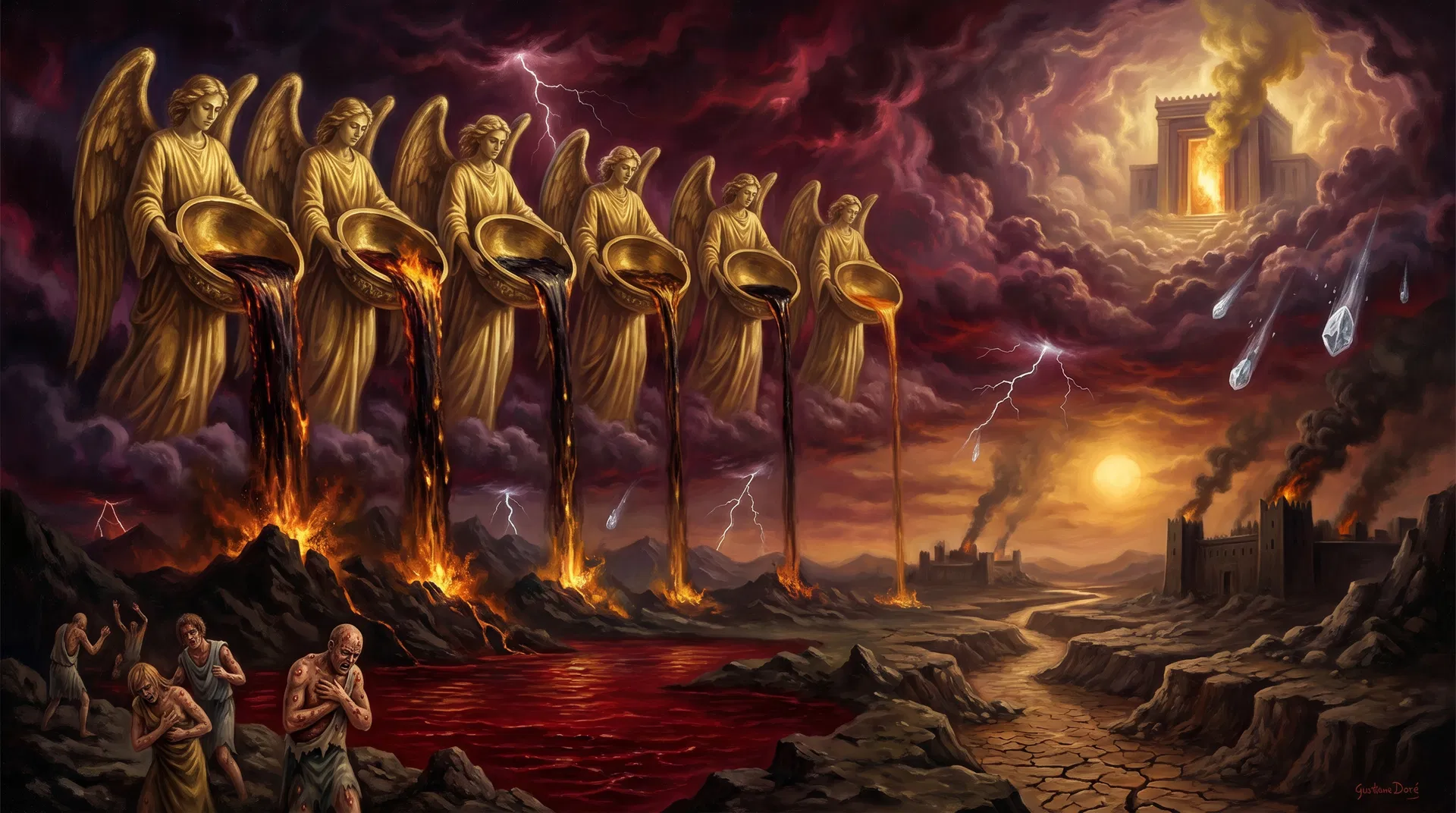
Revelation 15–16: The Seven Bowls of God’s Wrath
The seven bowls of Revelation 15–16 are the final, undiluted judgments of God — more severe than the seals and trumpets combined. This verse-by-verse study unpacks each bowl, the heavenly prelude in Revelation 15, the connection to the plagues of Exodus, and what these chapters reveal about the justice and holiness of God.

The New Heaven and New Earth — Revelation 21–22
The Bible does not end with judgment. It ends with a city. Revelation 21–22 describes the final destination of all of human history: a new heaven and a new earth, the Holy City New Jerusalem descending from God, the river of life, the Tree of Life, and the face of God seen at last. This verse-by-verse study of the last two chapters of Scripture explores what the eternal state actually looks like — and why it is far more physical, concrete, and glorious than most Christians imagine.
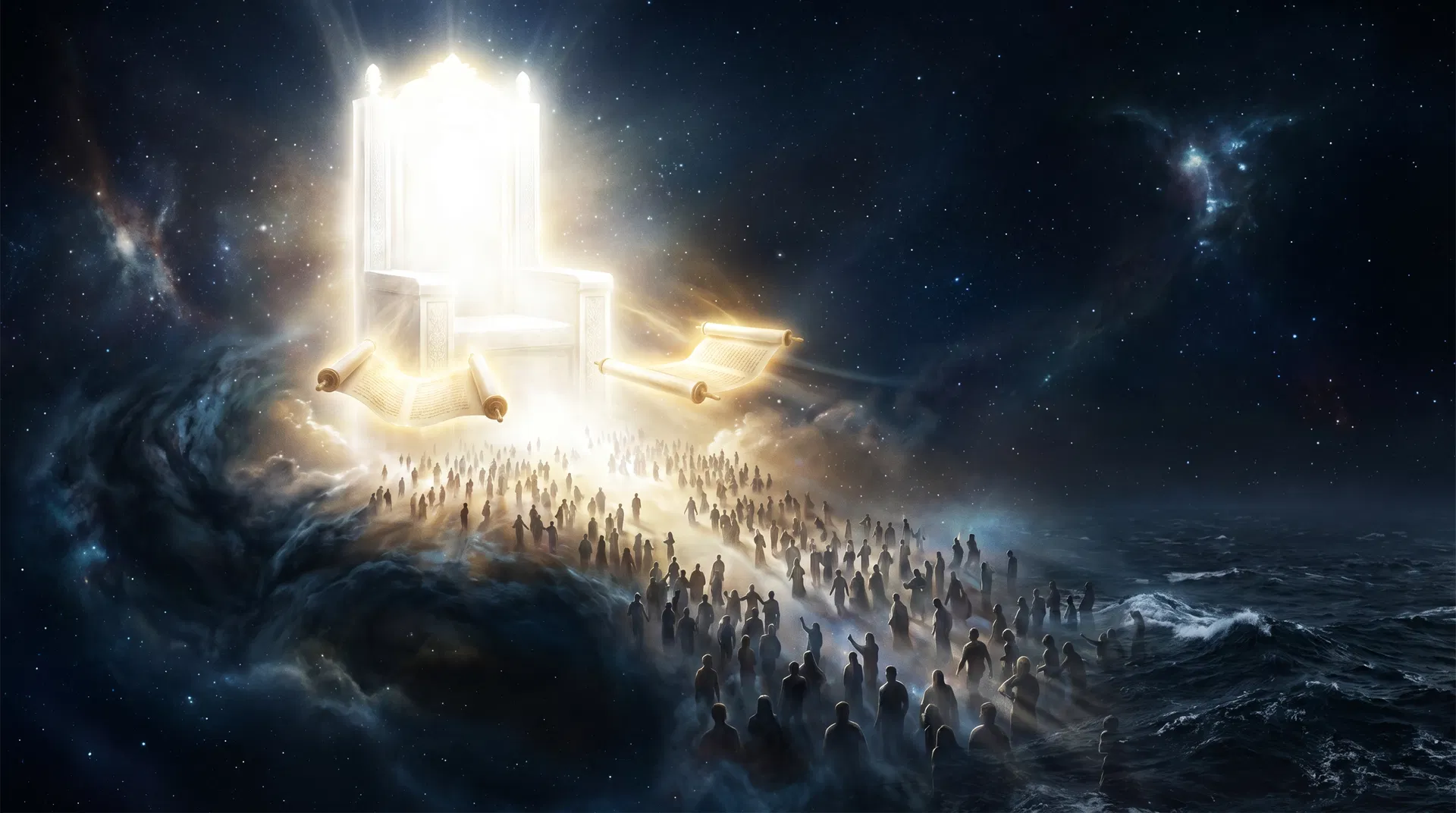
The Millennium and the Great White Throne — Revelation 20
Between the Second Coming and the eternal state stands a thousand years. Revelation 20 describes the binding of Satan, the first resurrection, the Millennial reign of Christ, the final rebellion, and the Great White Throne Judgment — the most comprehensive account of the end of history in all of Scripture. This verse-by-verse study examines what the Millennium is, who reigns during it, and what the Great White Throne means for every human being who has ever lived.
Reader Discussion
(0)Sign in to join the discussion.
No comments yet. Be the first to share your thoughts!
Continue Your Study
Explore the Bible with Scripture-grounded commentary, cross-references, and study tools.