What Does the Bible Say About the End Times?
Nearly every book of the Bible touches on the end times. This introductory survey walks through the major prophetic themes — from Daniel's visions to Jesus's Olivet Discourse to the book of Revelation — and shows how the Old and New Testaments form a unified prophetic story.
You are reading End Times Series — Part 0 of 12. Parts 1–13 are already published.
If you have ever looked at the headlines and wondered whether we are living in the last days, you are asking one of the oldest questions in human history. Wars, natural disasters, political upheaval, moral collapse — every generation has had reason to wonder whether the end is near. But the Bible does not leave us to speculation. From the visions of Daniel in the sixth century BC to the revelation given to the Apostle John on the island of Patmos, Scripture provides a detailed and coherent picture of how history will end. This article is the introduction to a twelve-part series that will walk through the major prophetic passages of the Bible one by one. Before we go deep into the individual texts, it helps to see the whole map — to understand the major themes, the key books, and how the Old and New Testaments form a single, unified prophetic story.
What Is Biblical Eschatology?
The word eschatology comes from two Greek words: eschatos (ἔσχατος), meaning "last," and logos (λόγος), meaning "study" or "word." Eschatology is simply the study of the last things — the end of the present age, the return of Christ, the final judgment, and the eternal state. Nearly every book of the Bible contains some element of eschatological teaching. The Old Testament prophets looked forward to a day when God would intervene in history, judge the nations, restore Israel, and establish His kingdom on earth. The New Testament reveals that this intervention comes in two stages: the first coming of Christ (which has already occurred) and the second coming (which is still future).
Understanding this two-stage structure is essential. Many of the prophecies in Isaiah, Zechariah, and Daniel were partially fulfilled at Christ's first coming but await complete fulfillment at His return. This is sometimes called prophetic foreshortening — the way a prophet could see two distant mountains of fulfillment without clearly seeing the valley of time between them. When Isaiah 61:1-2 describes the ministry of the Messiah, Jesus read the first portion in the synagogue at Nazareth and then stopped mid-sentence, declaring "Today this Scripture has been fulfilled in your hearing" (Luke 4:21). The second half of that verse — "the day of vengeance of our God" — awaits the Second Coming.
The Old Testament Foundation
"And in the days of those kings the God of heaven will set up a kingdom that shall never be destroyed, nor shall the kingdom be left to another people. It shall break in pieces all these kingdoms and bring them to an end, and it shall stand forever." — Daniel 2:44 (ESV)
Read Daniel 9 in context
Open the full chapter with AI commentary, cross-references, and multiple translations — free, no account required.
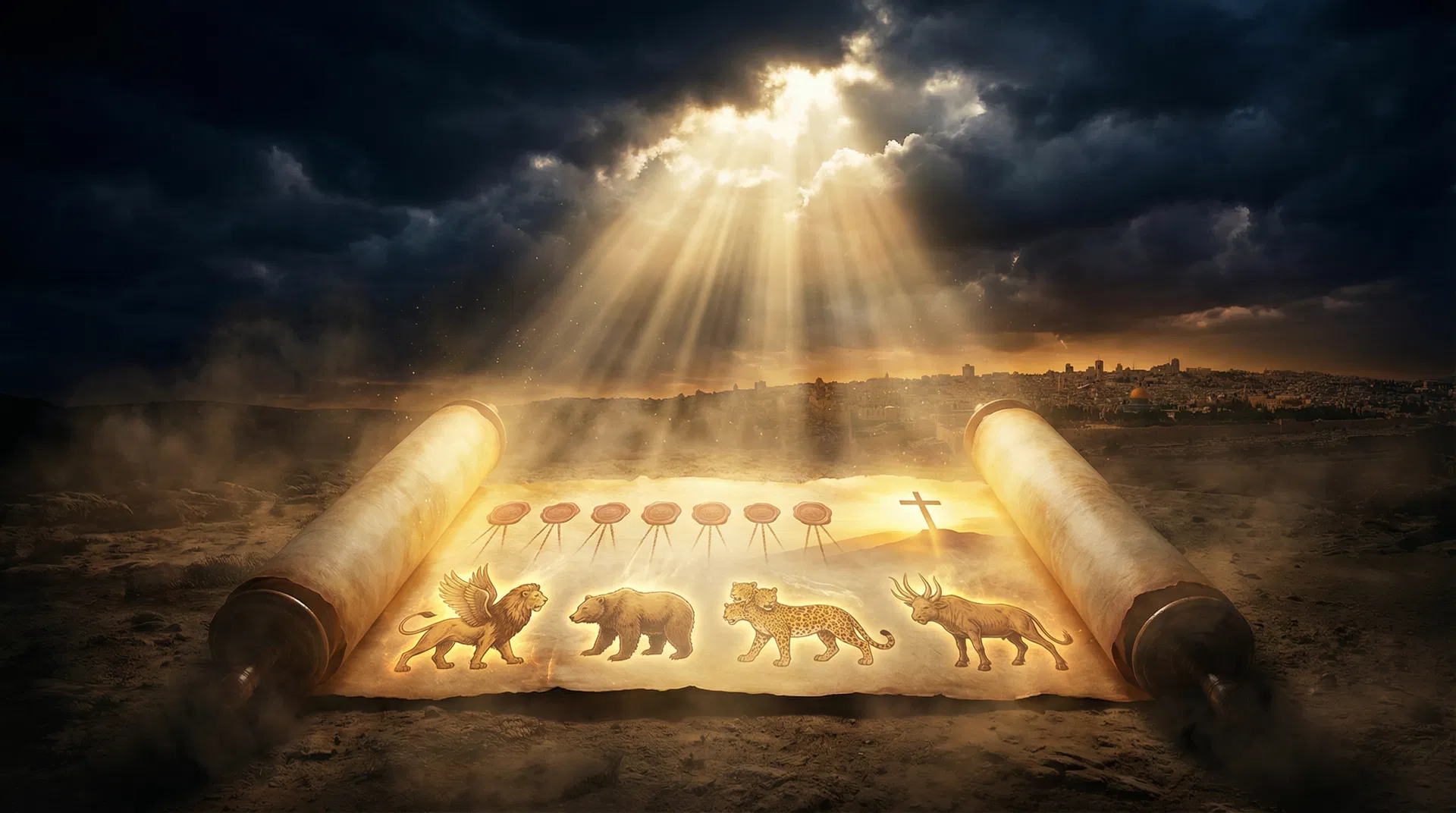
The prophetic architecture of the end times is built primarily on four Old Testament books: Daniel, Isaiah, Ezekiel, and Zechariah. Daniel is the cornerstone. Writing from Babylon in the sixth century BC, Daniel received visions that outlined the entire sweep of Gentile world history — from the Babylonian Empire through to the final kingdom of God. His vision of the four great beasts in Daniel 7 corresponds to the same four empires depicted in the statue of Nebuchadnezzar's dream in Daniel 2 (Babylon, Persia, Greece, Rome), and both visions culminate in the same event: the Ancient of Days taking His seat and the Son of Man receiving an everlasting kingdom.
Ezekiel contributes two critical prophetic blocks: the valley of dry bones (Ezekiel 37), which prophesied the national restoration of Israel — remarkably fulfilled in 1948 — and the Gog-Magog war (Ezekiel 38-39), which describes a future invasion of Israel by a northern coalition of nations. Zechariah 12-14 provides the most detailed Old Testament account of the final battle for Jerusalem, the national mourning of Israel when they recognize the Messiah they pierced, and the physical return of Christ to the Mount of Olives. Isaiah contributes sweeping visions of the Millennial Kingdom (Isaiah 2, 11, 65) and the New Creation (Isaiah 65:17, 66:22).
If you are new to cross-references in the Bible [blocked], the end times passages are among the most richly interconnected in all of Scripture — every major New Testament prophecy has roots in the Old Testament.
The Words of Jesus
"For then there will be great tribulation, such as has not been from the beginning of the world until now, no, and never will be. And if those days had not been cut short, no human being would be saved. But for the sake of the elect those days will be cut short." — Matthew 24:21-22 (ESV)
The most important single prophetic discourse in the New Testament is the Olivet Discourse, recorded in Matthew 24-25, Mark 13, and Luke 21. Sitting on the Mount of Olives overlooking Jerusalem, Jesus answered His disciples' question: "What will be the sign of your coming and of the end of the age?" (Matthew 24:3). His answer covered the entire period from His ascension to His return, including false messiahs, wars, famines, earthquakes, persecution of believers, the preaching of the gospel to all nations, and — most critically — "the abomination of desolation spoken of by the prophet Daniel" (Matthew 24:15).
By quoting Daniel directly, Jesus confirmed that Daniel's prophecies are literal and still future. The abomination of desolation refers to Daniel 9:27, where the Antichrist breaks his covenant with Israel and desecrates the rebuilt Jerusalem temple at the midpoint of the seven-year Tribulation. Jesus's description of the Great Tribulation that follows (Matthew 24:21) is the most severe language He ever used about any future event. He also gave the parable of the fig tree (Matthew 24:32-35) as a sign: when the fig tree — widely understood as a symbol of Israel — puts out its leaves, the generation that sees it will not pass away before all these things take place. Many scholars connect this to the re-establishment of the nation of Israel in 1948.
If you find this kind of verse-by-verse commentary helpful, Bible Compass provides in-depth study tools for every passage in the Bible. Try it free →
The New Testament Completion
"For the Lord himself will descend from heaven with a cry of command, with the voice of an archangel, and with the sound of the trumpet of God. And the dead in Christ will rise first. Then we who are alive, who are left, will be caught up together with them in the clouds to meet the Lord in the air, and so we will always be with the Lord." — 1 Thessalonians 4:16-17 (ESV)
The Apostle Paul's letters to the Thessalonians provide the clearest New Testament teaching on the Rapture — the event in which Christ returns in the clouds and all living and deceased believers are caught up to meet Him. The Greek word translated "caught up" is harpazo (ἁρπάζω), which means to seize, snatch, or take by force. The Latin Vulgate translates it rapturo, from which we get the English word "rapture." Paul describes this as a mystery previously unrevealed (1 Corinthians 15:51-52), distinguishing it from the Second Coming, when Christ returns to earth with His saints to establish His kingdom.
The book of Revelation, written by the Apostle John around AD 95, is the capstone of biblical prophecy. It draws together virtually every prophetic thread from the Old Testament — the four beasts of Daniel 7 reappear in Revelation 13, the 70th week of Daniel 9 frames the seven-year Tribulation, and the New Jerusalem of Revelation 21-22 fulfills Isaiah's vision of the New Creation. Revelation is organized around three sets of seven judgments (seals, trumpets, and bowls) that unfold during the Tribulation, culminating in the Battle of Armageddon, the return of Christ, the Millennial Kingdom, the Great White Throne Judgment, and the eternal state.
The Major Themes at a Glance
Before diving into the individual passages in the articles that follow, here is a summary of the major end times themes and where to find them in Scripture:
| Theme | Key Passages |
|---|---|
| The Rapture | 1 Thess. 4:13-18; 1 Cor. 15:51-54 |
| The Tribulation (7 years) | Daniel 9:27; Rev. 6-19 |
| The Antichrist | Daniel 7:24-25; 2 Thess. 2:3-10; Rev. 13 |
| The Abomination of Desolation | Daniel 9:27; Matthew 24:15 |
| The Battle of Armageddon | Zechariah 14:1-4; Rev. 19:11-21 |
| The Second Coming | Matthew 24:30; Zechariah 14:4; Rev. 19:11 |
| The Millennial Kingdom | Revelation 20:1-6; Isaiah 11:6-9 |
| The Final Judgment | Revelation 20:11-15 |
| The New Creation | Isaiah 65:17; Revelation 21-22 |
How to Study End Times Prophecy
End times prophecy is one of the most debated areas of Christian theology, and it is easy to become overwhelmed or to get lost in secondary debates about timing and sequence. Here are two practical principles that will serve you well as you work through this series.
First, let Scripture interpret Scripture. The best commentary on a prophetic passage is another passage of Scripture. When Revelation 13 describes a beast rising from the sea with ten horns and seven heads, the immediate interpretive key is Daniel 7, which uses identical imagery. When Jesus speaks of "the abomination of desolation," He tells you directly to read Daniel. The Bible is its own best interpreter, and verse-by-verse Bible study [blocked] is the most reliable method for navigating prophetic texts.
Second, hold the major themes with confidence and the secondary details with humility. The major events — the Rapture, the Tribulation, the Second Coming, the Millennium, the Final Judgment, the New Creation — are clearly and repeatedly taught across both Testaments. The precise sequence of some events and the interpretation of specific symbols are areas where faithful, Bible-believing scholars have disagreed for centuries. The goal of this series is not to settle every debate but to walk through the primary texts carefully and let them speak.
If you found this introduction helpful, the next article in this series dives into Matthew 24 — the Olivet Discourse — where Jesus Himself describes the signs that will precede His return. Read Part 1: The Olivet Discourse → [blocked]
Bible Compass provides verse-by-verse commentary, reading plans, and cross-reference tools for every passage in the Bible — including the complete prophetic books of Daniel and Revelation. Start your free study today →
Recommended Reading
For those who want to go deeper into biblical eschatology from a Calvary Chapel perspective, Chuck Smith's End Times: A Report on Future Survival is an accessible and scripturally grounded introduction to the major prophetic themes.

For a comprehensive academic treatment, J. Dwight Pentecost's Things to Come: A Study in Biblical Eschatology remains one of the most thorough systematic studies of prophetic Scripture available.

Recommended Reading
Deepen your study with these hand-picked books related to this article.
The Difficult Passages in Revelation
Robert L. Furrow
Navigates the most challenging verses and topics in Revelation with biblical clarity and pastoral insight.
The Book of Signs
Dr. David Jeremiah
31 undeniable prophecies of the apocalypse, helping readers understand the signs of the end times.

The Second Coming
John MacArthur
MacArthur's definitive study of Christ's return — examining the signs, sequence, and significance of the Second Coming from Matthew 24 and Revelation 19.
As an Amazon Associate, Bible Compass earns from qualifying purchases.
Get the 7-Day Holy Week Devotional
Palm Sunday → Resurrection Sunday — free, delivered to your inbox
Related Articles
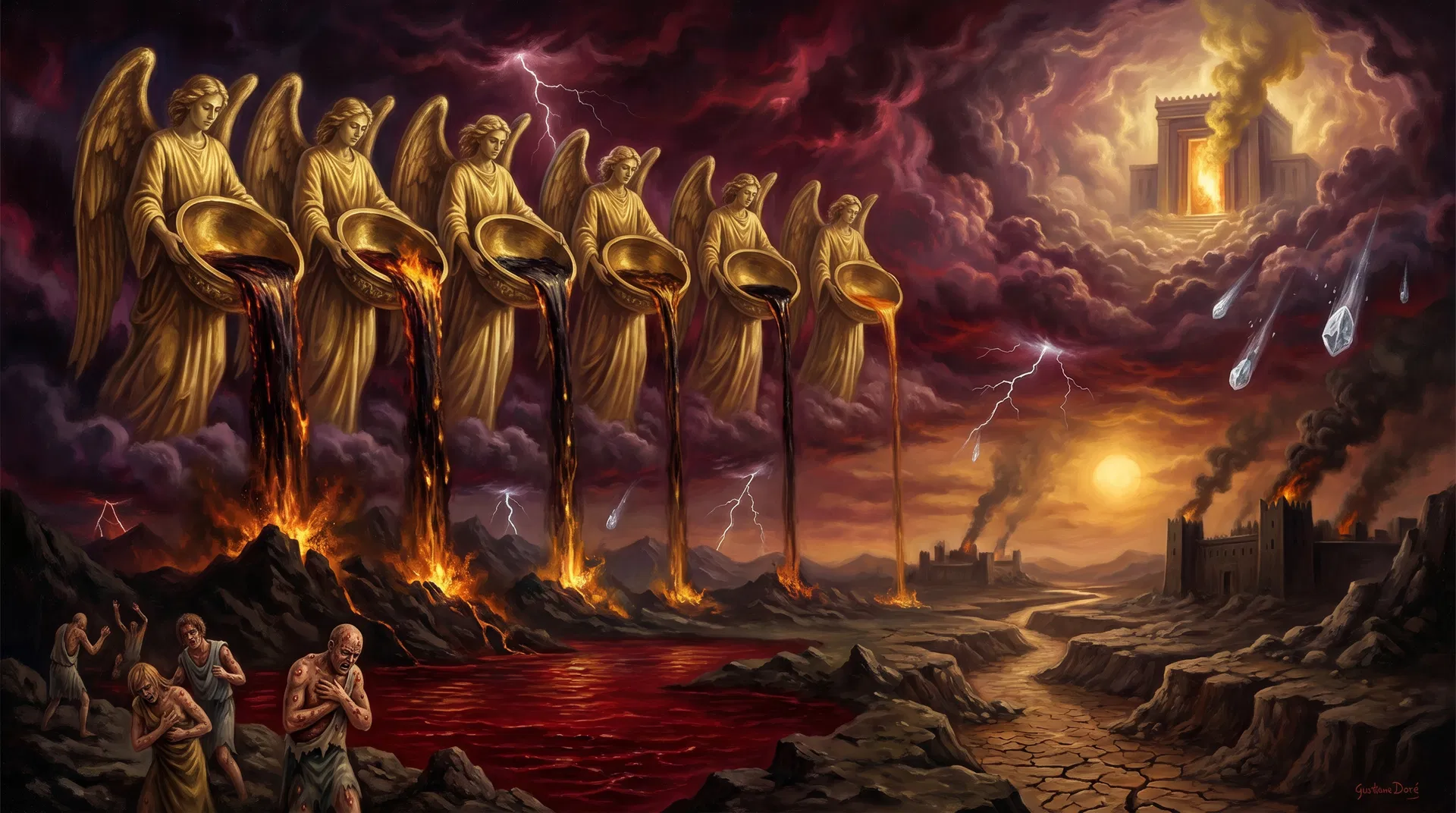
Revelation 15–16: The Seven Bowls of God’s Wrath
The seven bowls of Revelation 15–16 are the final, undiluted judgments of God — more severe than the seals and trumpets combined. This verse-by-verse study unpacks each bowl, the heavenly prelude in Revelation 15, the connection to the plagues of Exodus, and what these chapters reveal about the justice and holiness of God.
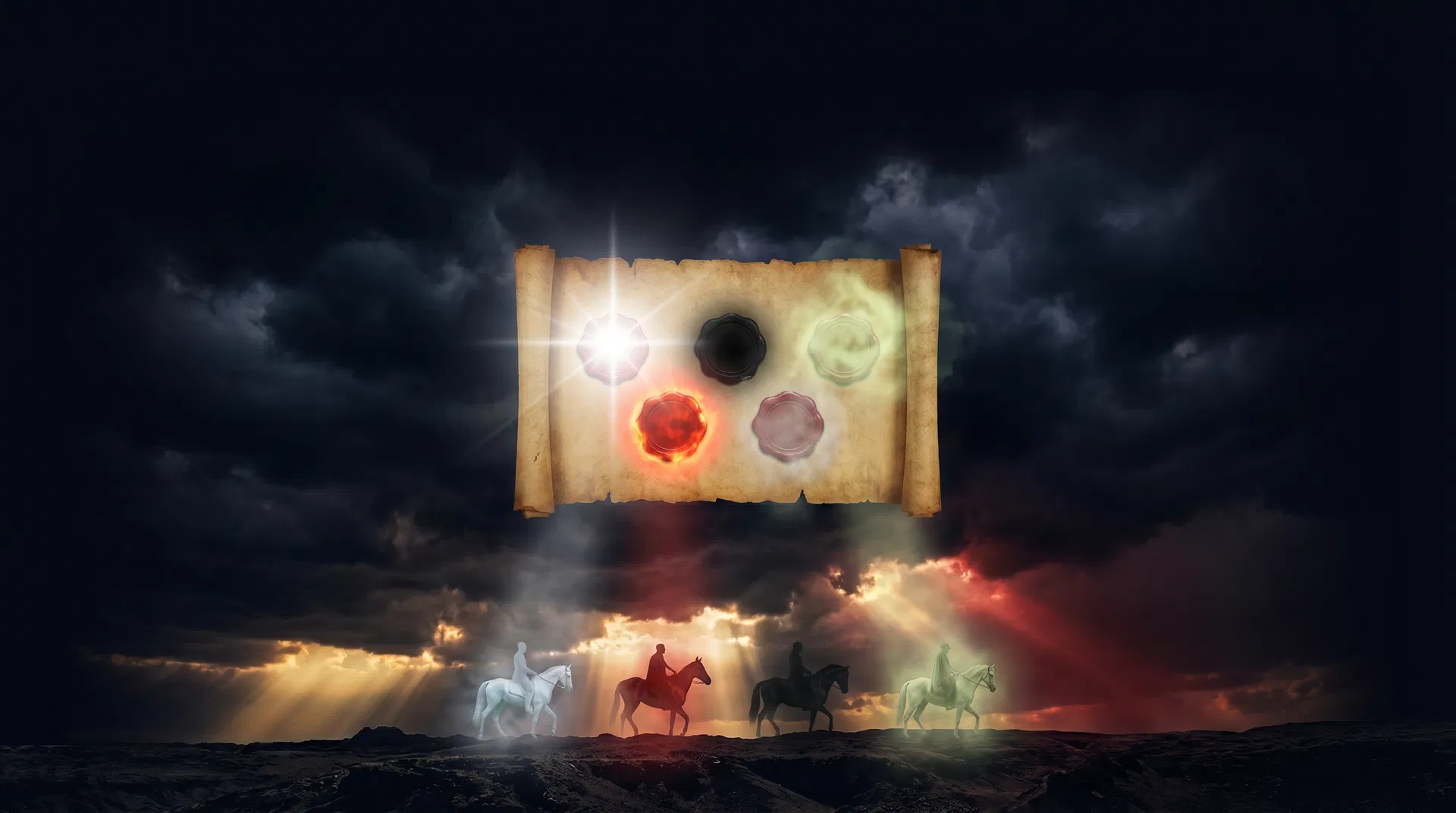
Revelation 6: The Seven Seals and the Four Horsemen of the Apocalypse
When the Lamb opens the seven seals in Revelation 6, history's final chapter begins. This verse-by-verse study examines each seal judgment — from the four horsemen to the martyrs' cry to the cosmic shaking of the sixth seal — and shows how they connect to Daniel, Matthew 24, and Paul's letters.
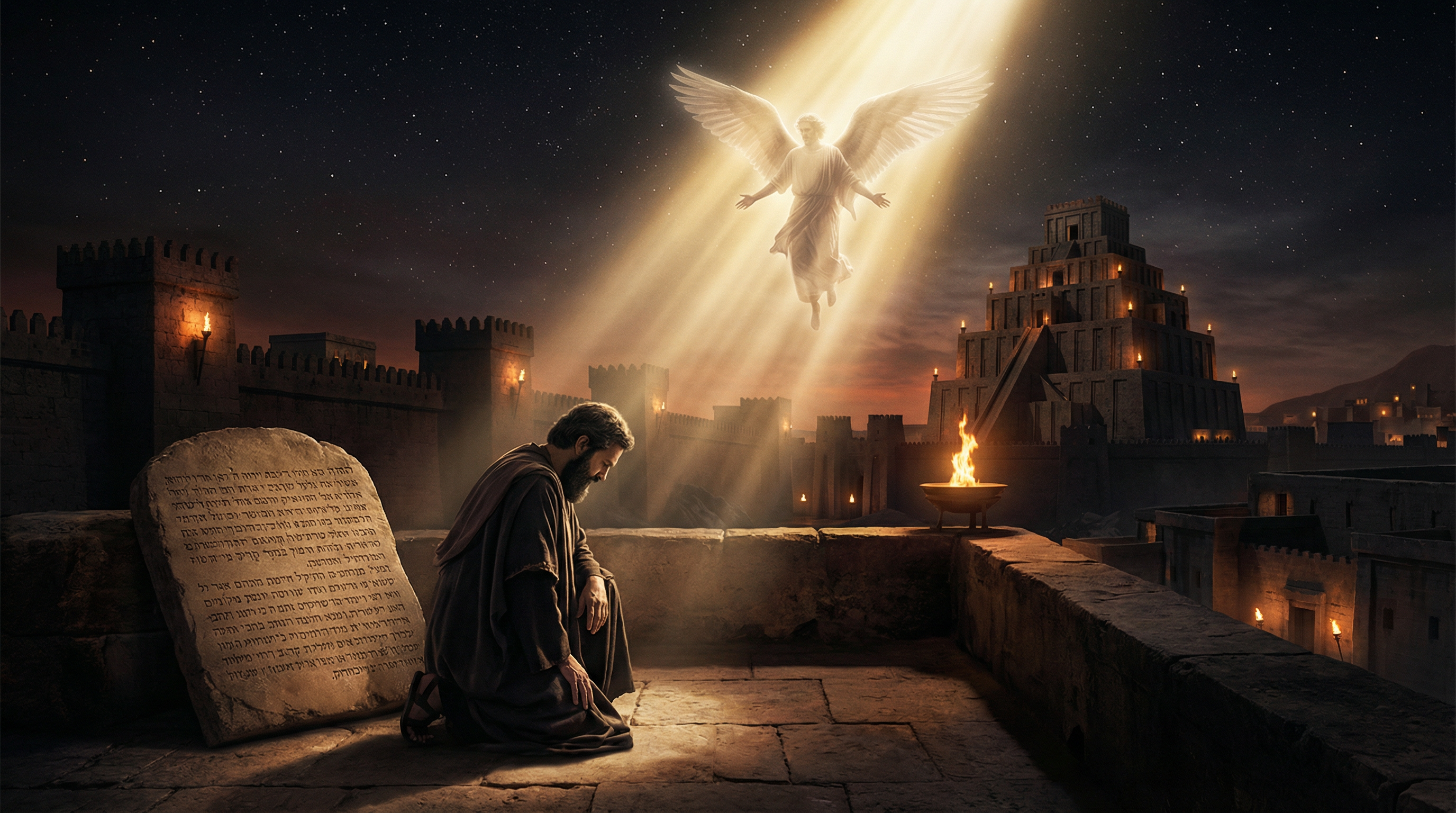
Daniel 9: The 70 Weeks Prophecy -- A Timeline for the End
Daniel 9:24-27 is the most mathematically precise prophecy in all of Scripture -- 70 weeks of years that pinpoint the coming of the Messiah, the destruction of Jerusalem, and a final seven-year period at the end of history. Study it verse by verse.
Reader Discussion
(0)Sign in to join the discussion.
No comments yet. Be the first to share your thoughts!
Continue Your Study
Explore the Bible with Scripture-grounded commentary, cross-references, and study tools.